Cardiff Solid Body Electric Guitar
Builder/Blogger: Steve Eubanks
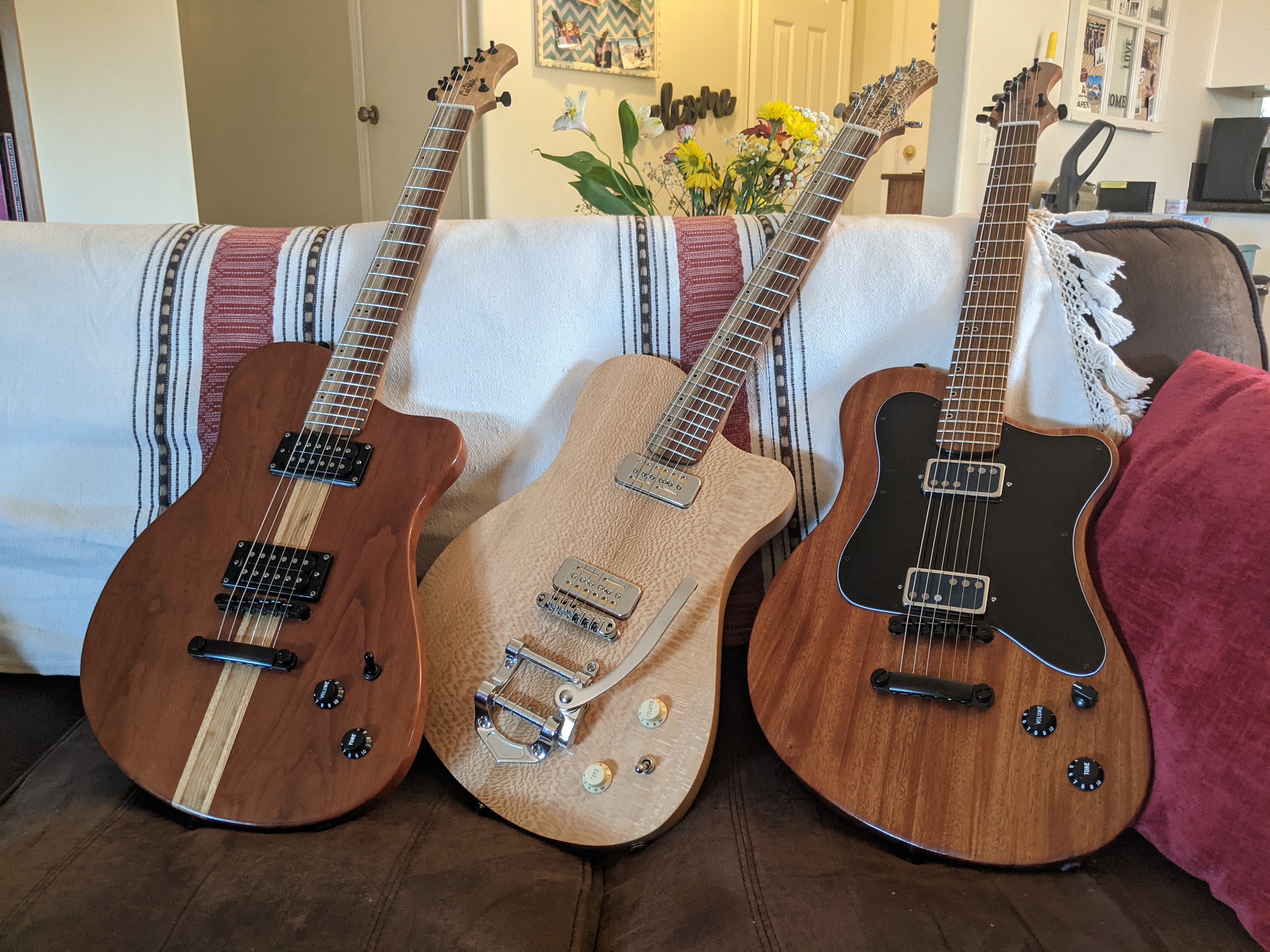
The Cardiff build is a special one for me because this is my first time building a guitar that I designed from scratch. This is not an LP or a Strat, or a variation on one of the classic designs. This is a guitar that I designed from the ground up, starting with a sketch pad and a vague idea. Of course I get that there are not that many ways to design an electric guitar, so I'm not going to say that no one has ever made a guitar that looks like the Cardiff. But I will say, that I didn't start with someone else's design, and modify it to make it my own. I started with a blank page, and am really please with what I ended up with. And as a result, there are a few design features that tend to show up in a lot of my designs. A subtle offset, the signature CalStyle headstock, and a preference for thin bodies can be seen in a lot of my instruments, and those style elements first came through in this design. The first appearance of these design elements was in the Gover Beach custom ukulele build, and then I fully committed by incorporating them into the Cardiff as well as the Whitney guitars and Santa Cruz ukuleles that I built along side the Cardiff.
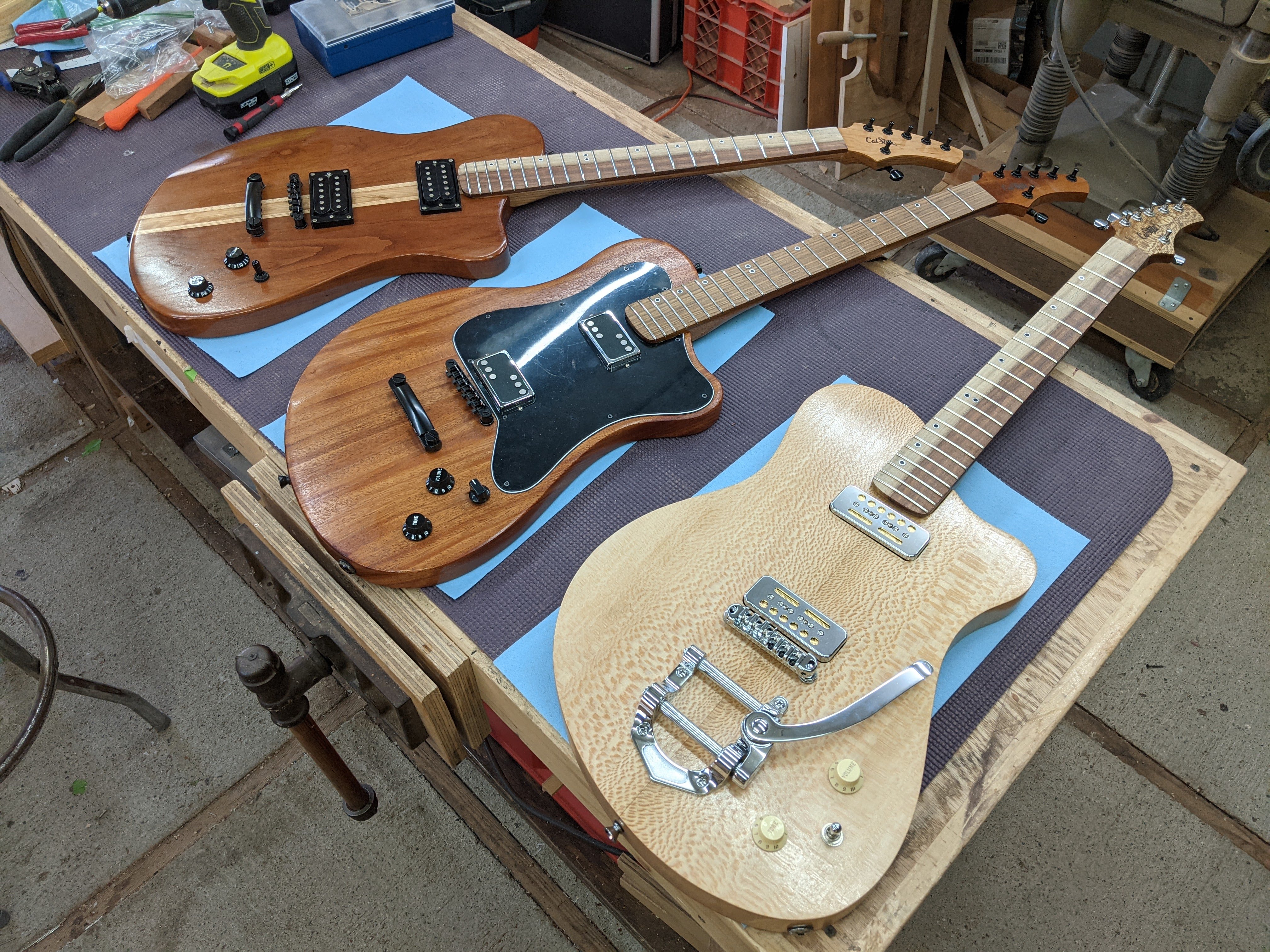
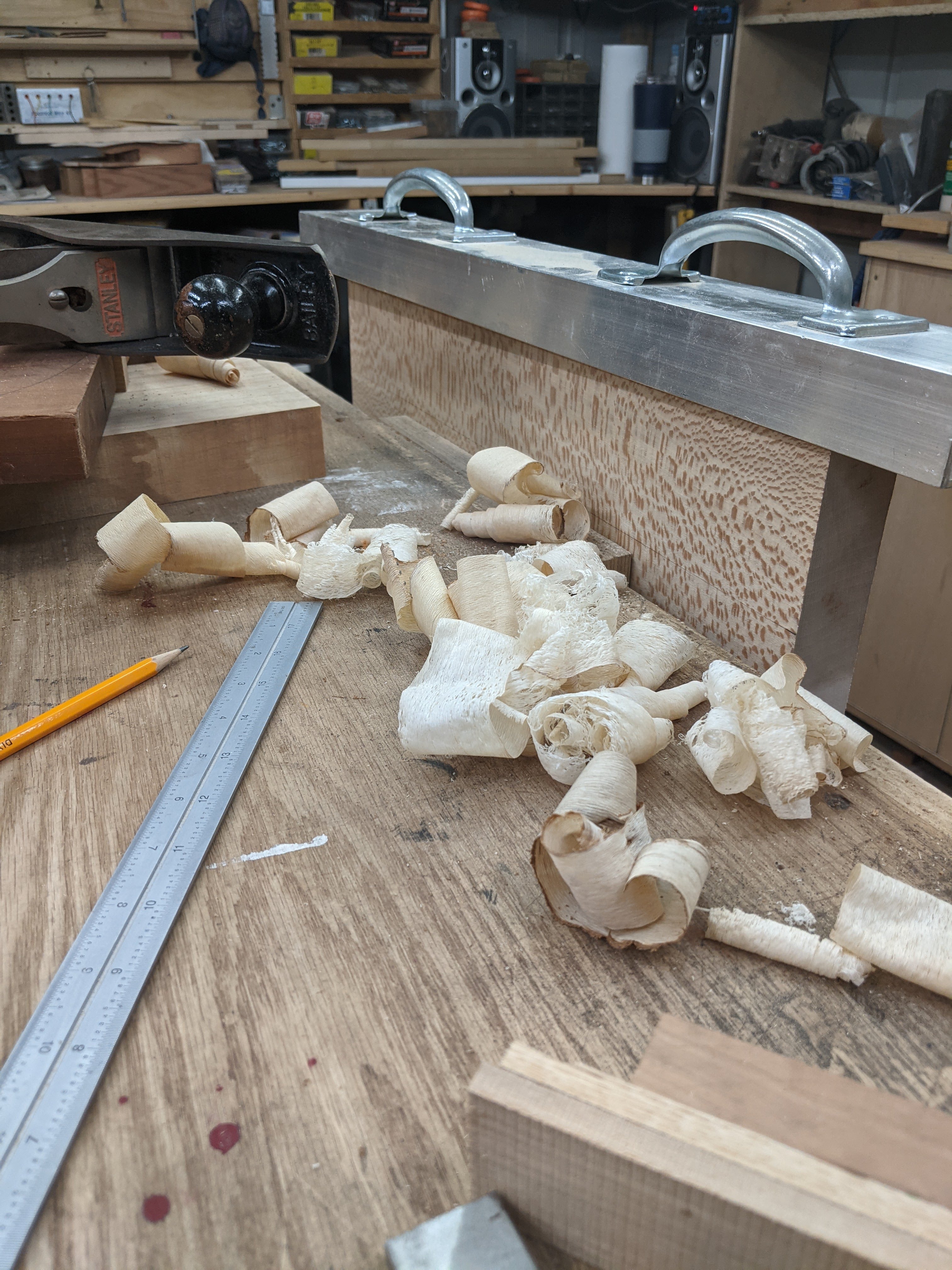
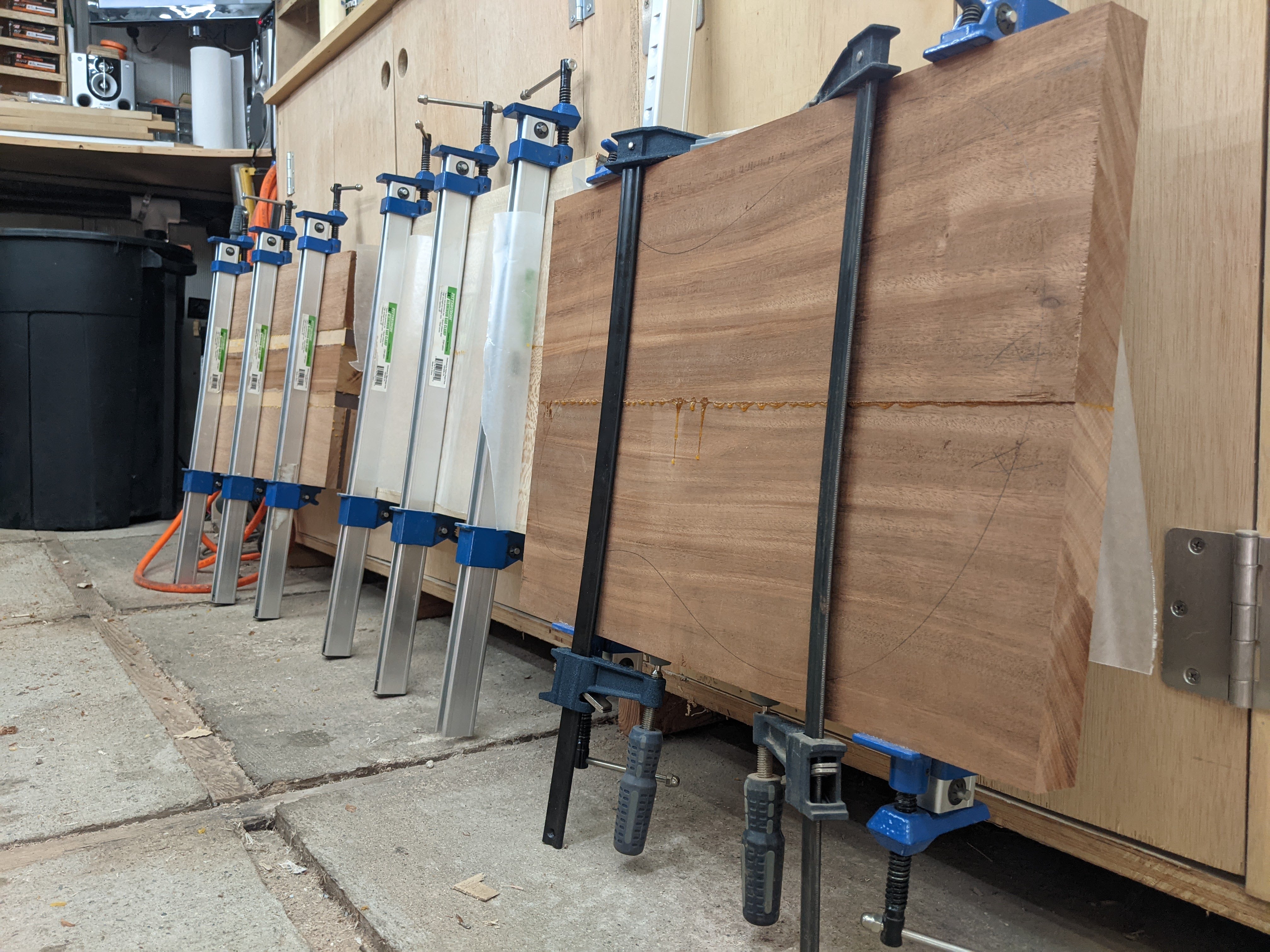
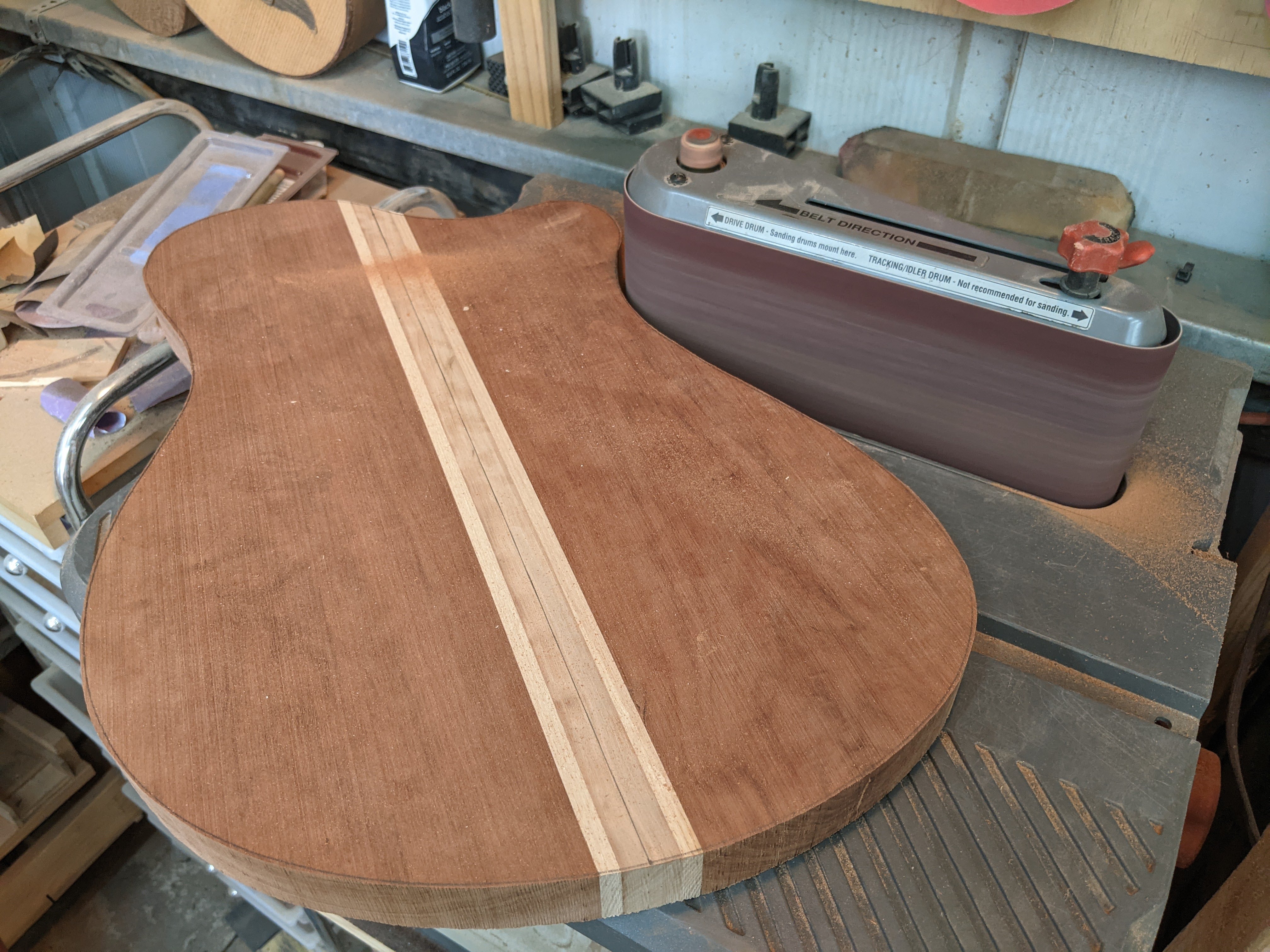
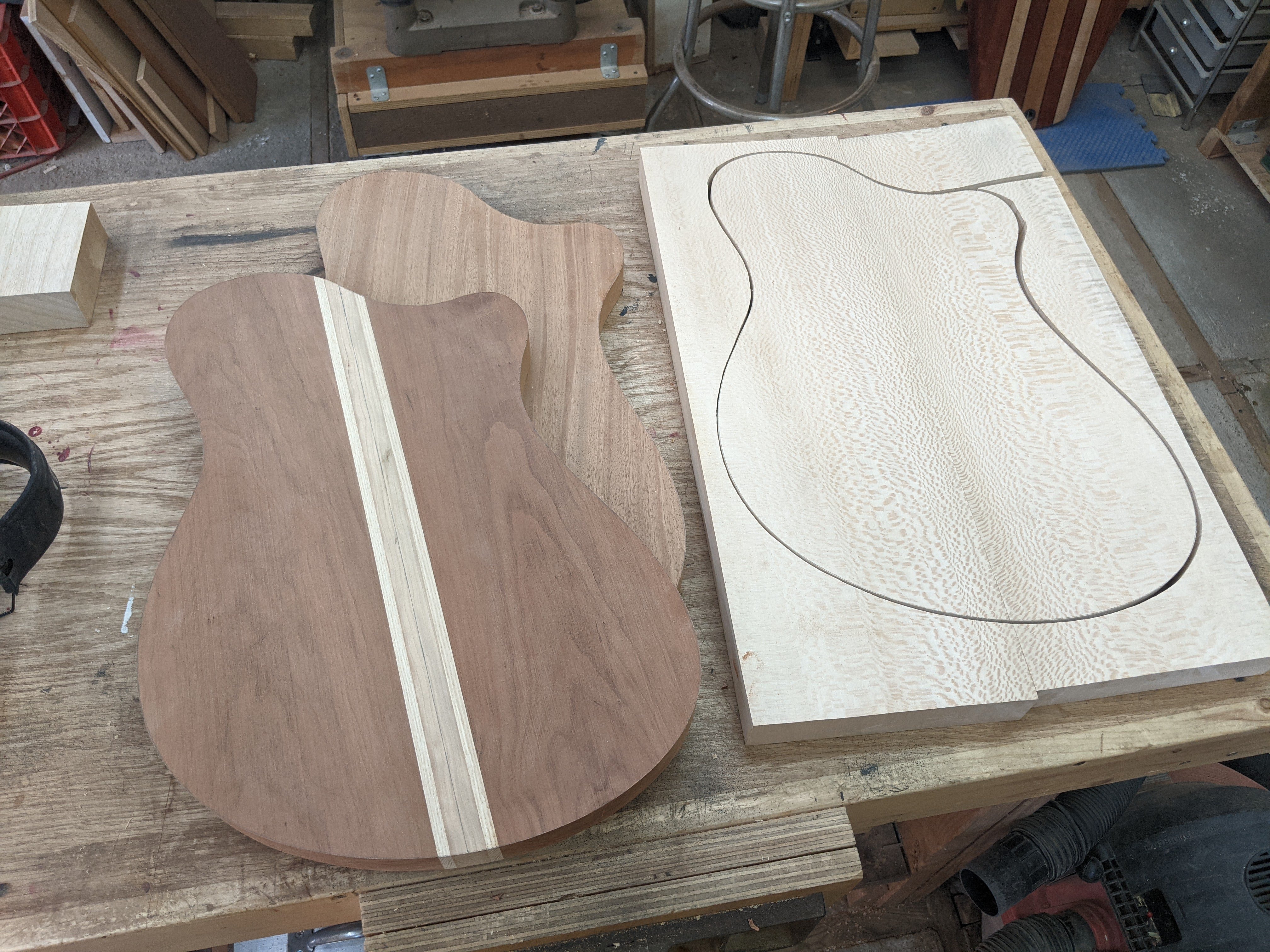
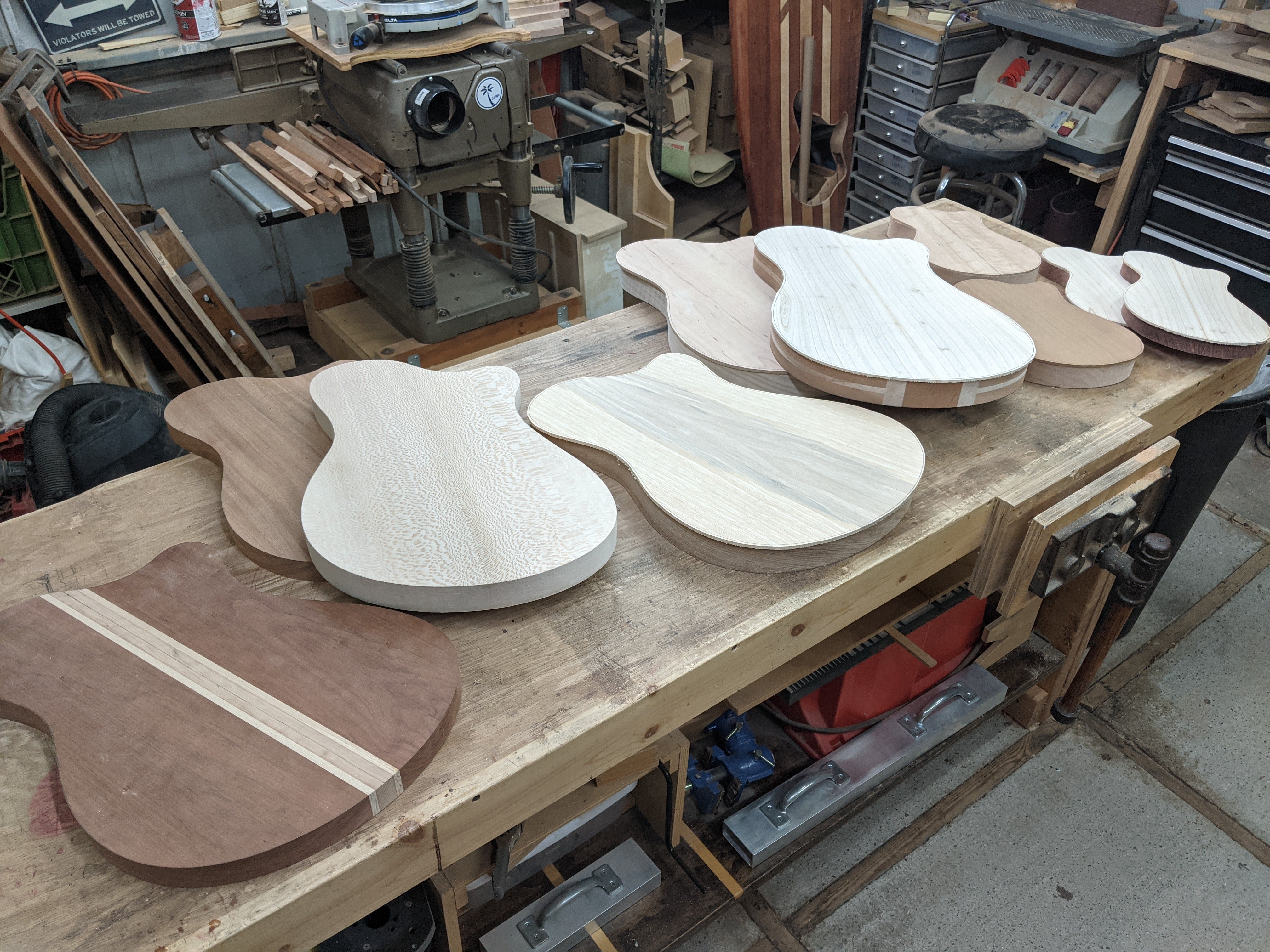
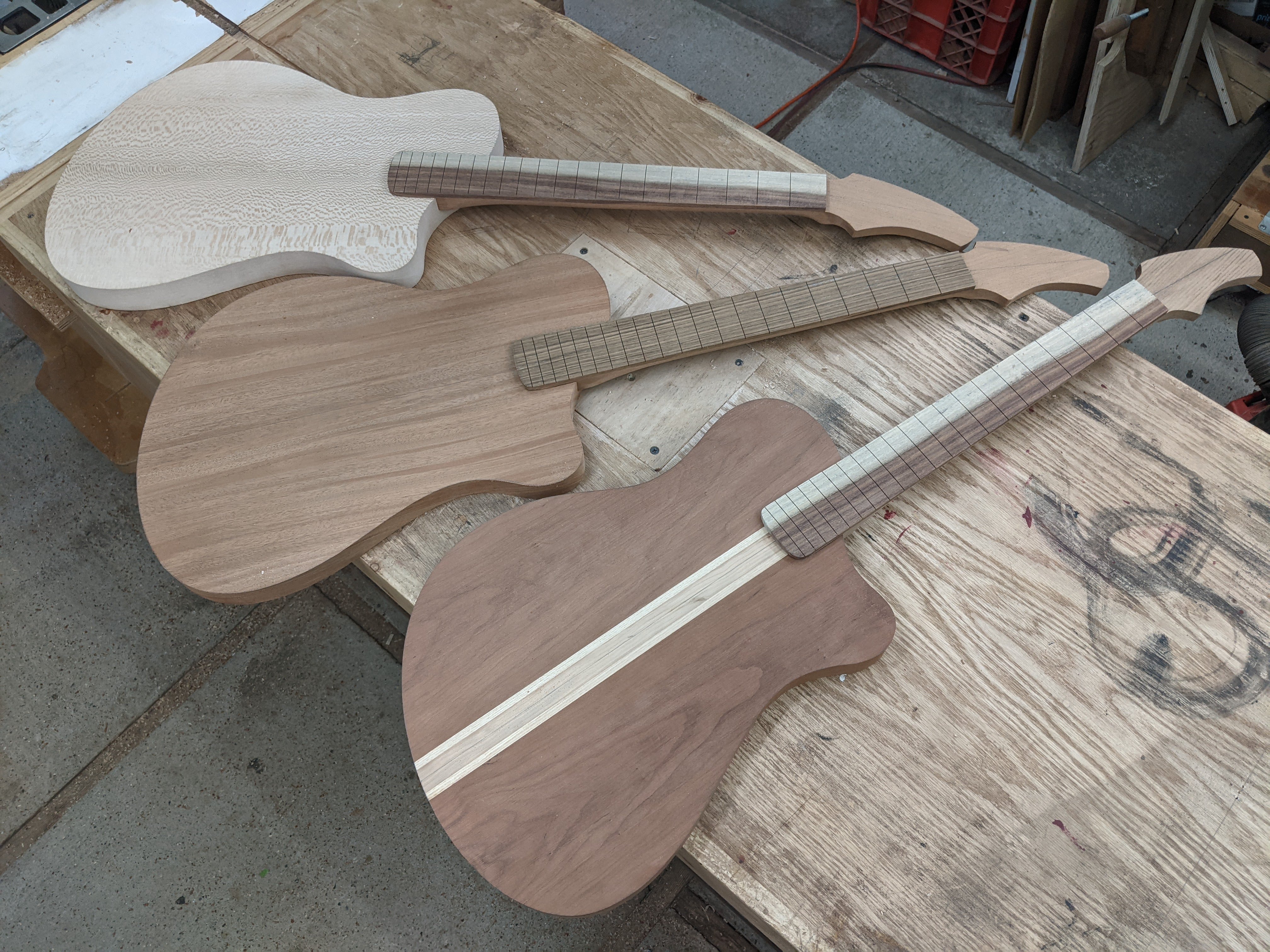
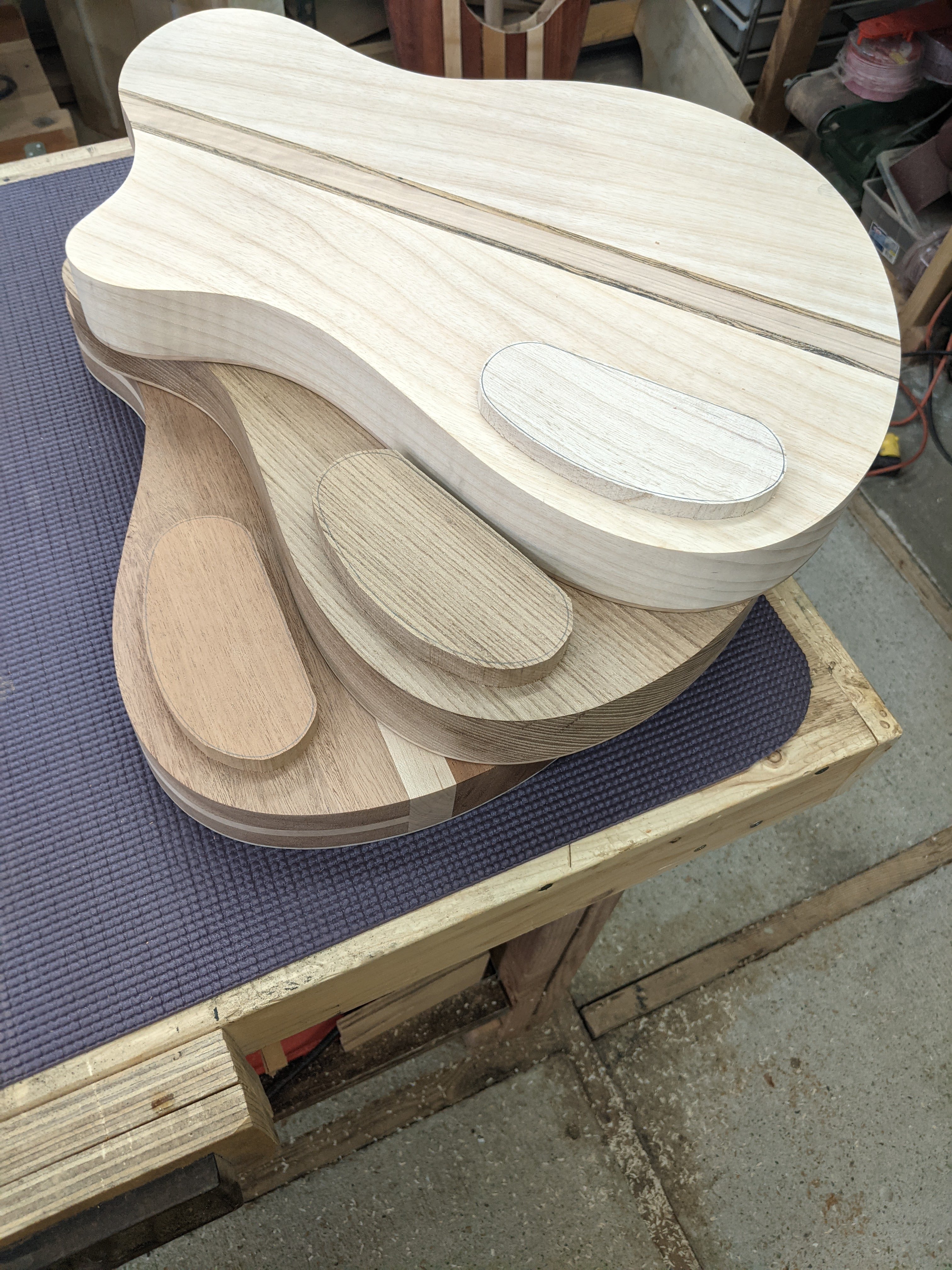
As is tradition, this build started with templates and glue ups. I selected some of my nicest billets of mahogany, cherry and sycamore, and did my initial body cutouts, then sanded them to shape. You can see below that in a nod to efficiency, I created the body blanks for the Cardiff, Whitney, and Santa Cruz builds all at the same time.
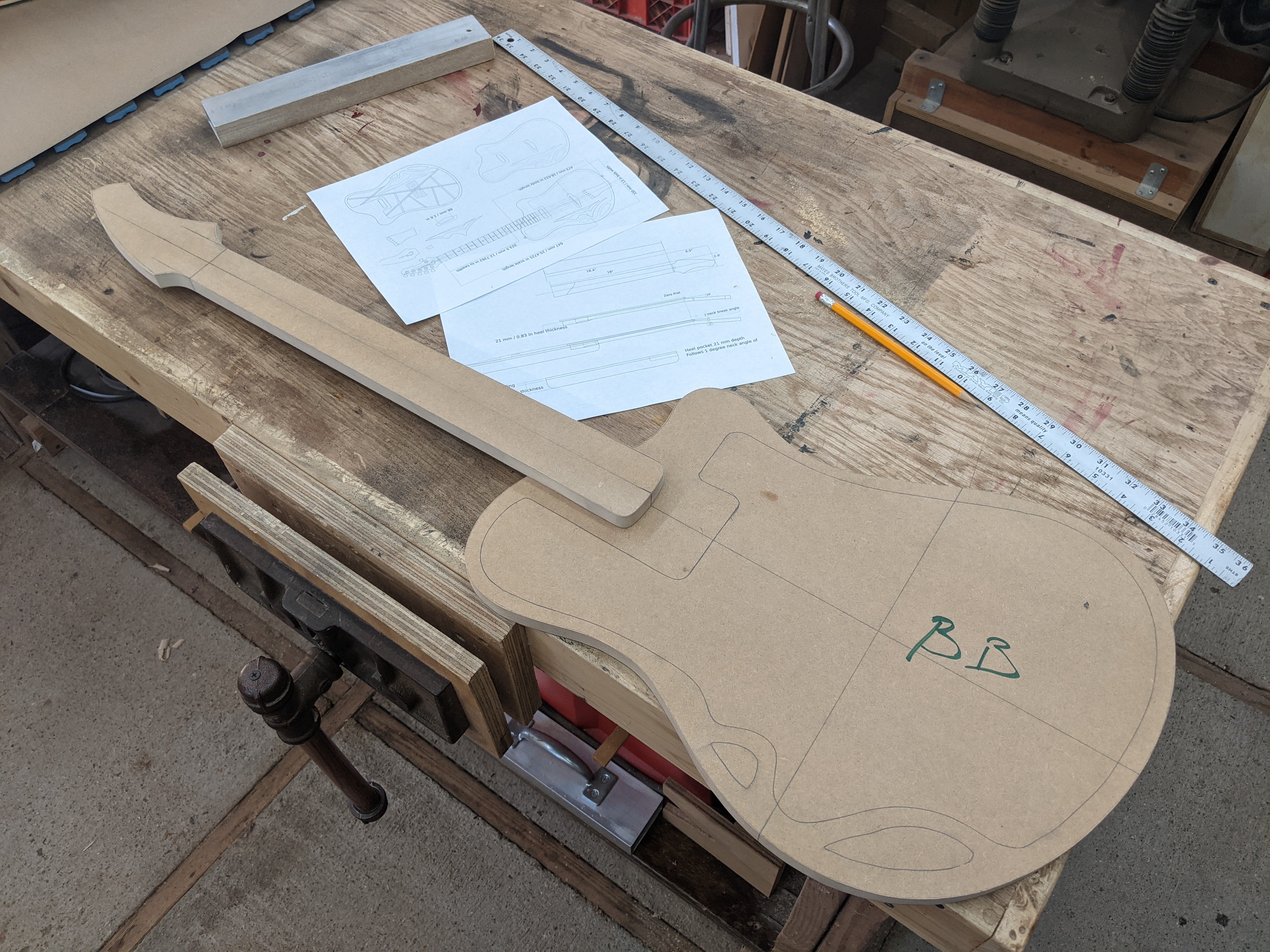
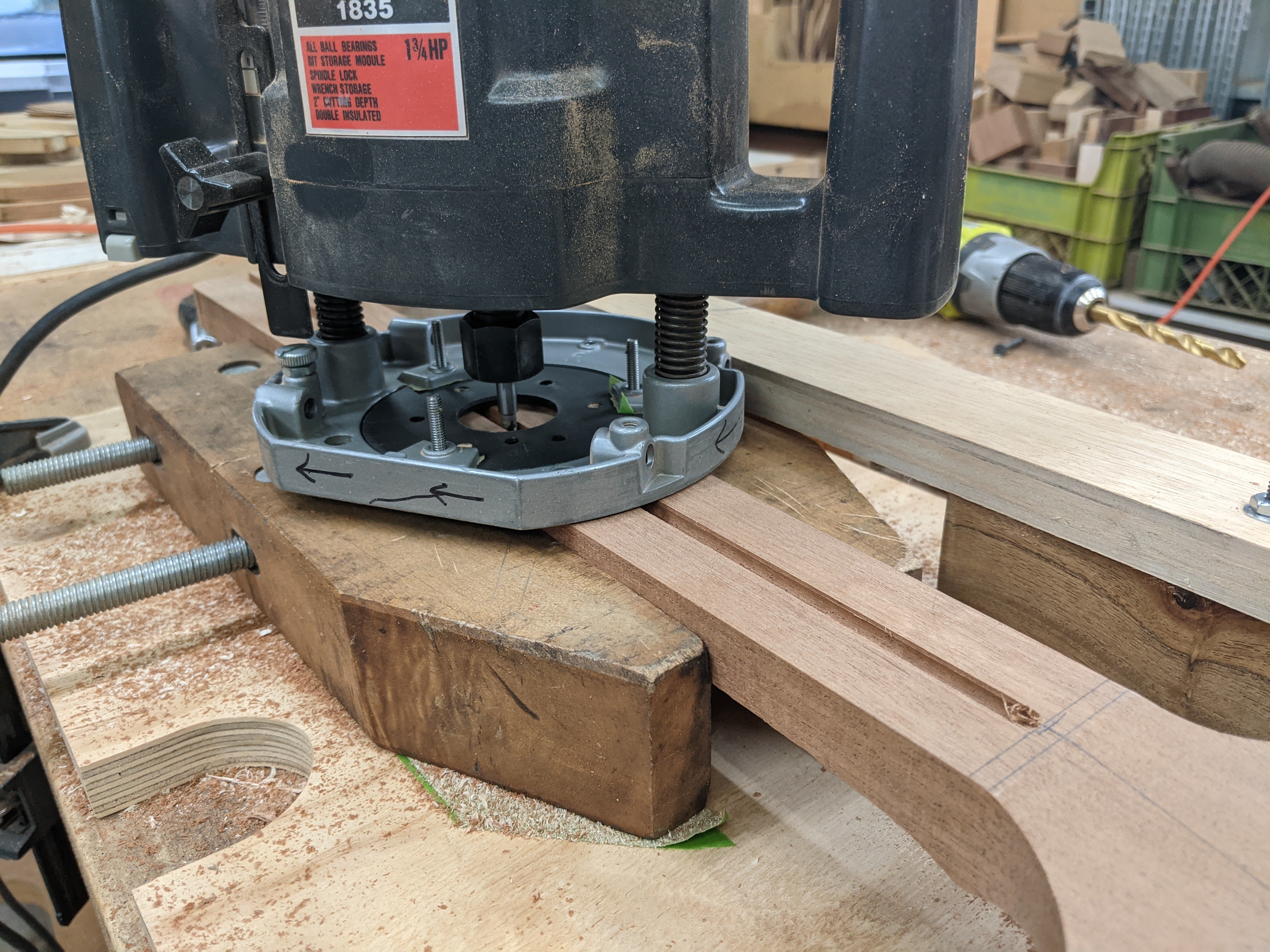
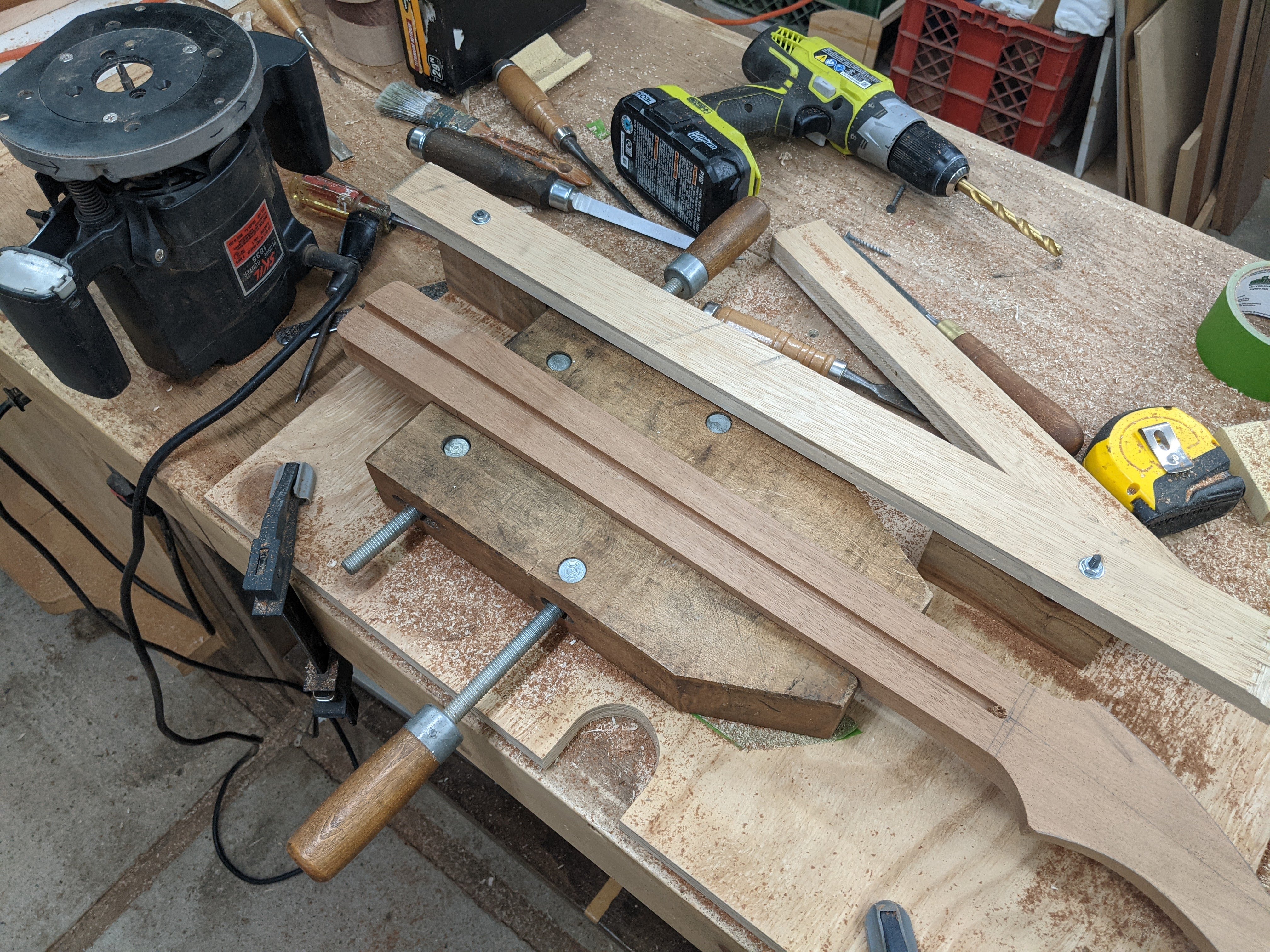
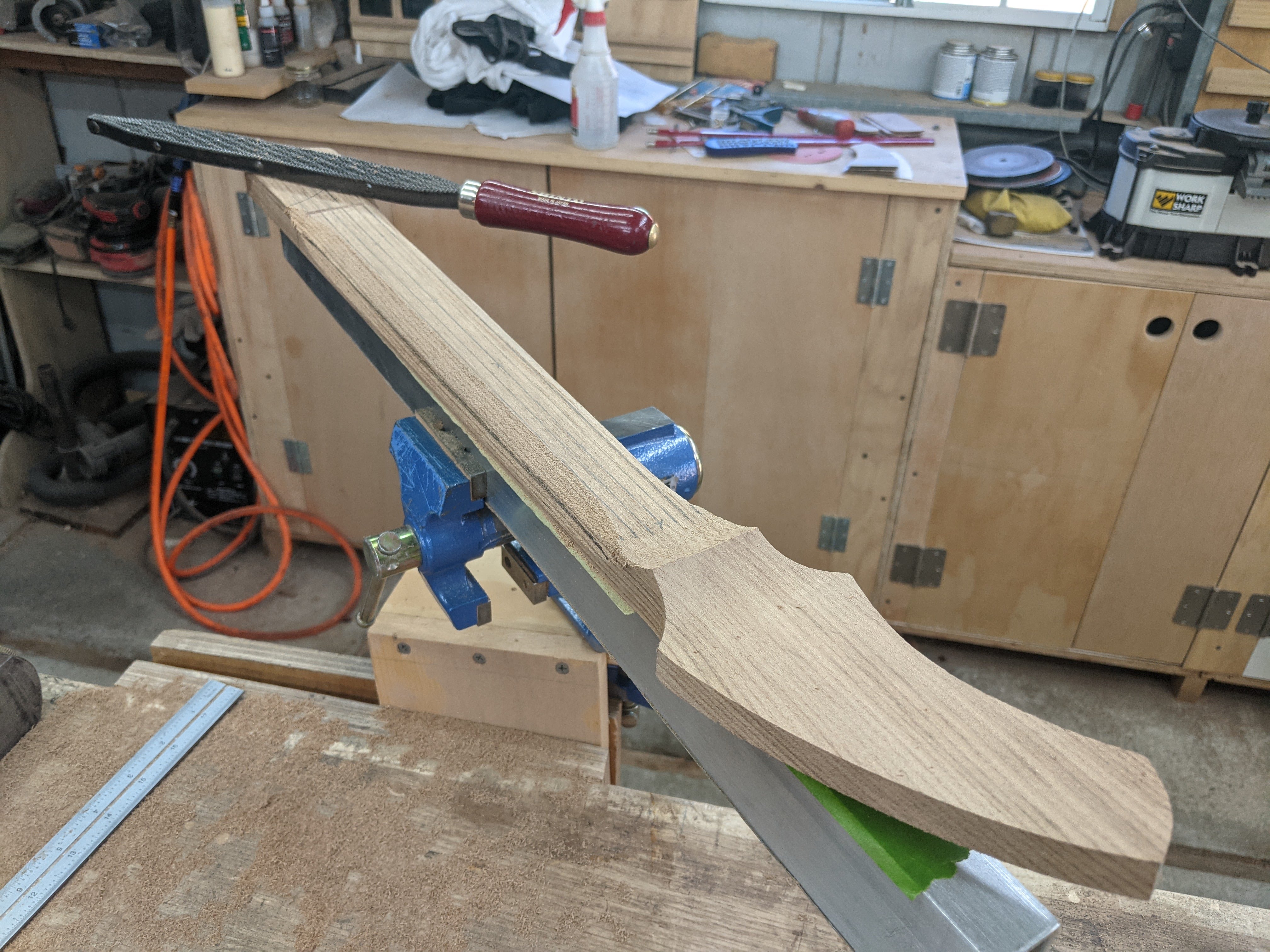
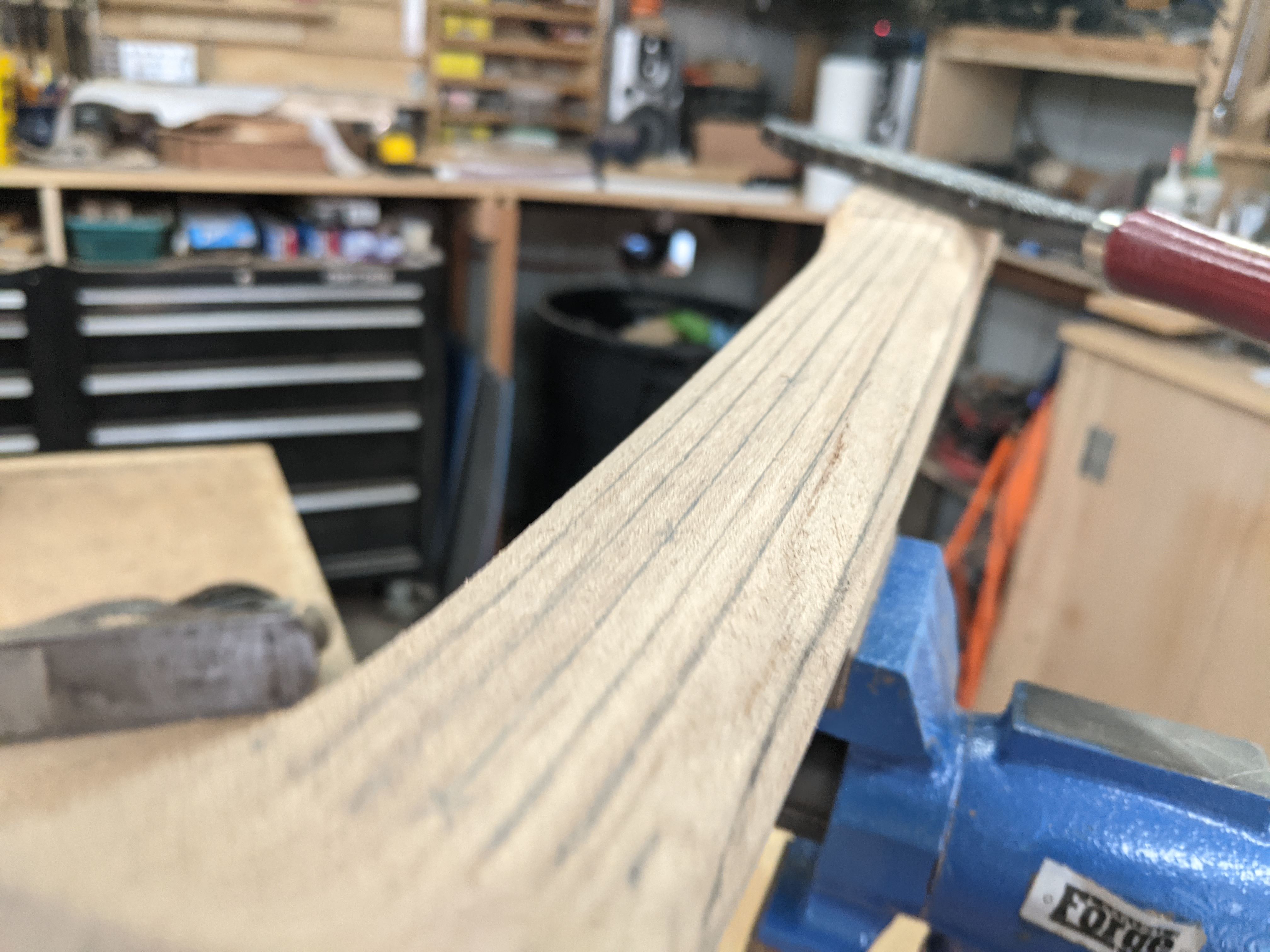
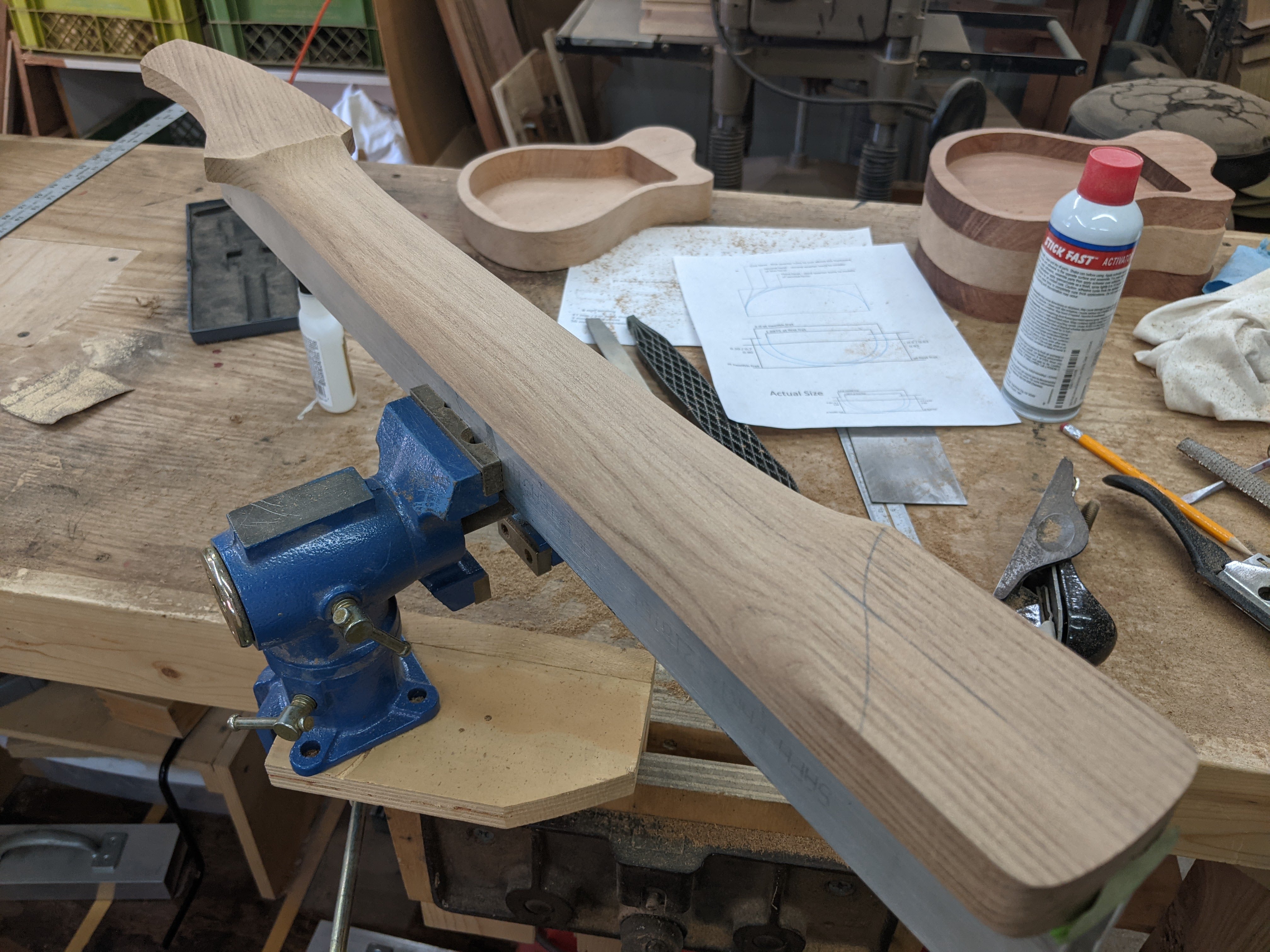
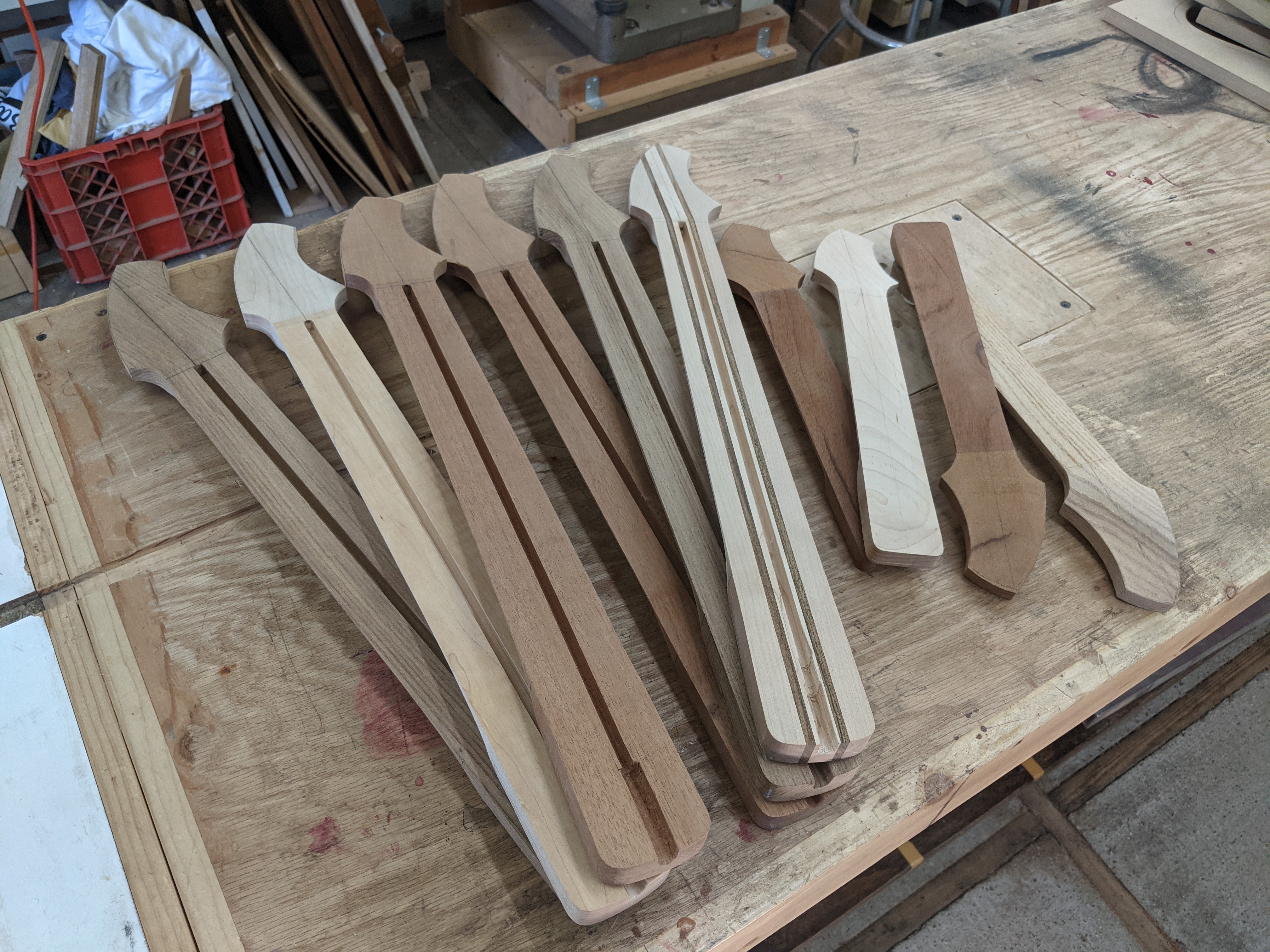
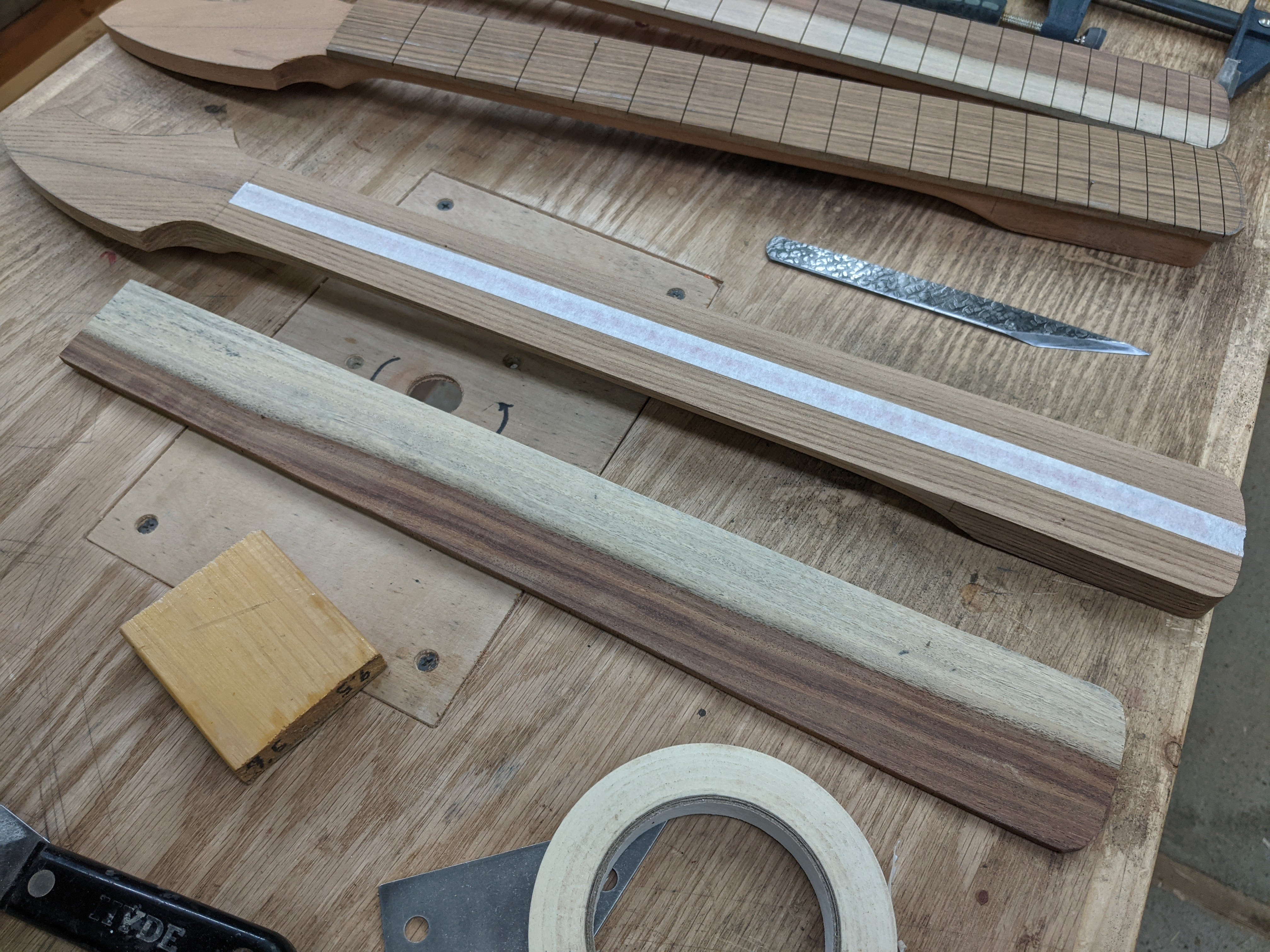
Necks followed. Rough cut, cut to shape, route truss rod channels, then shape the profile. I use the faceting method for shaping necks as it gives me the most consistency and repeatability.
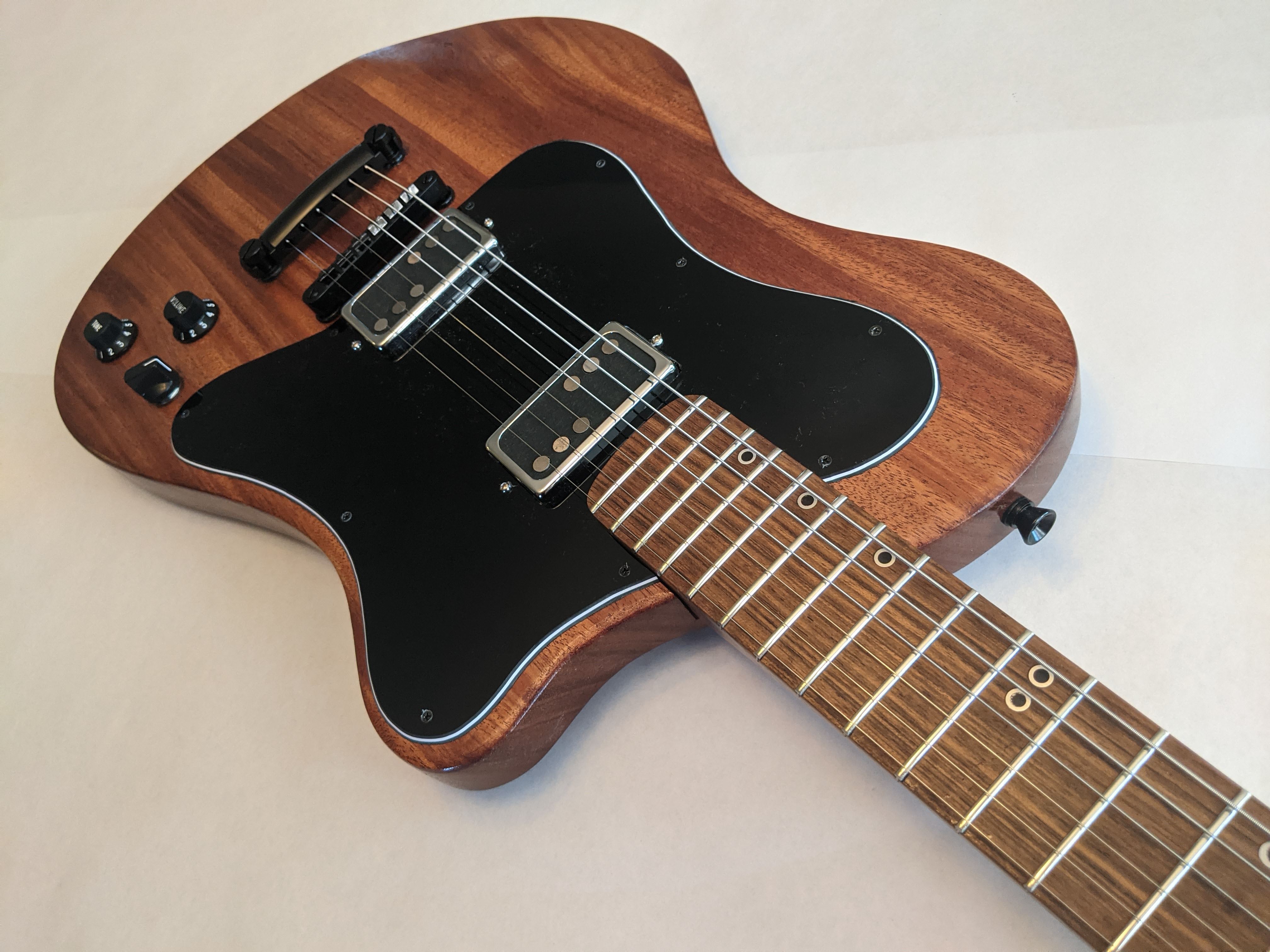
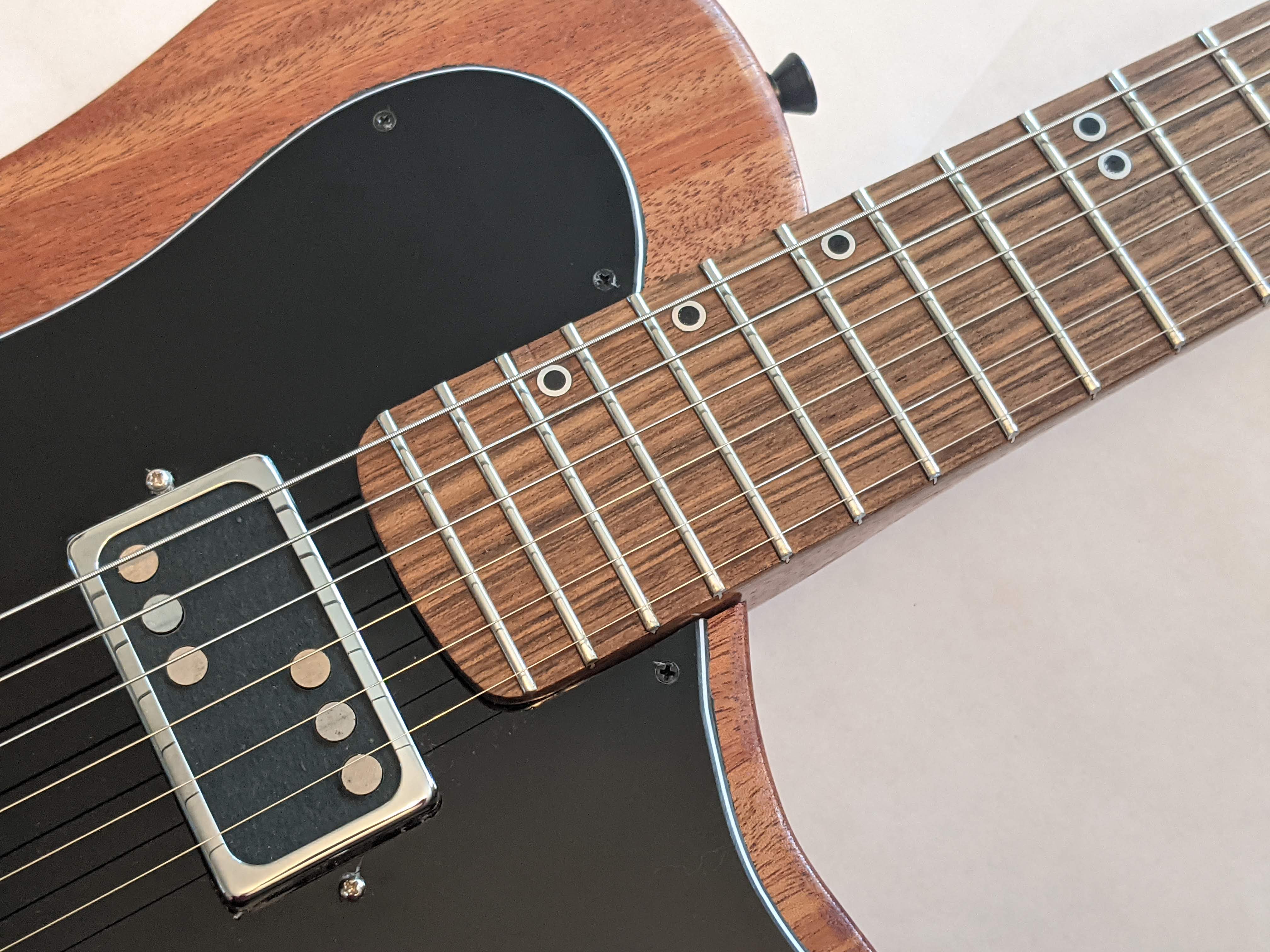
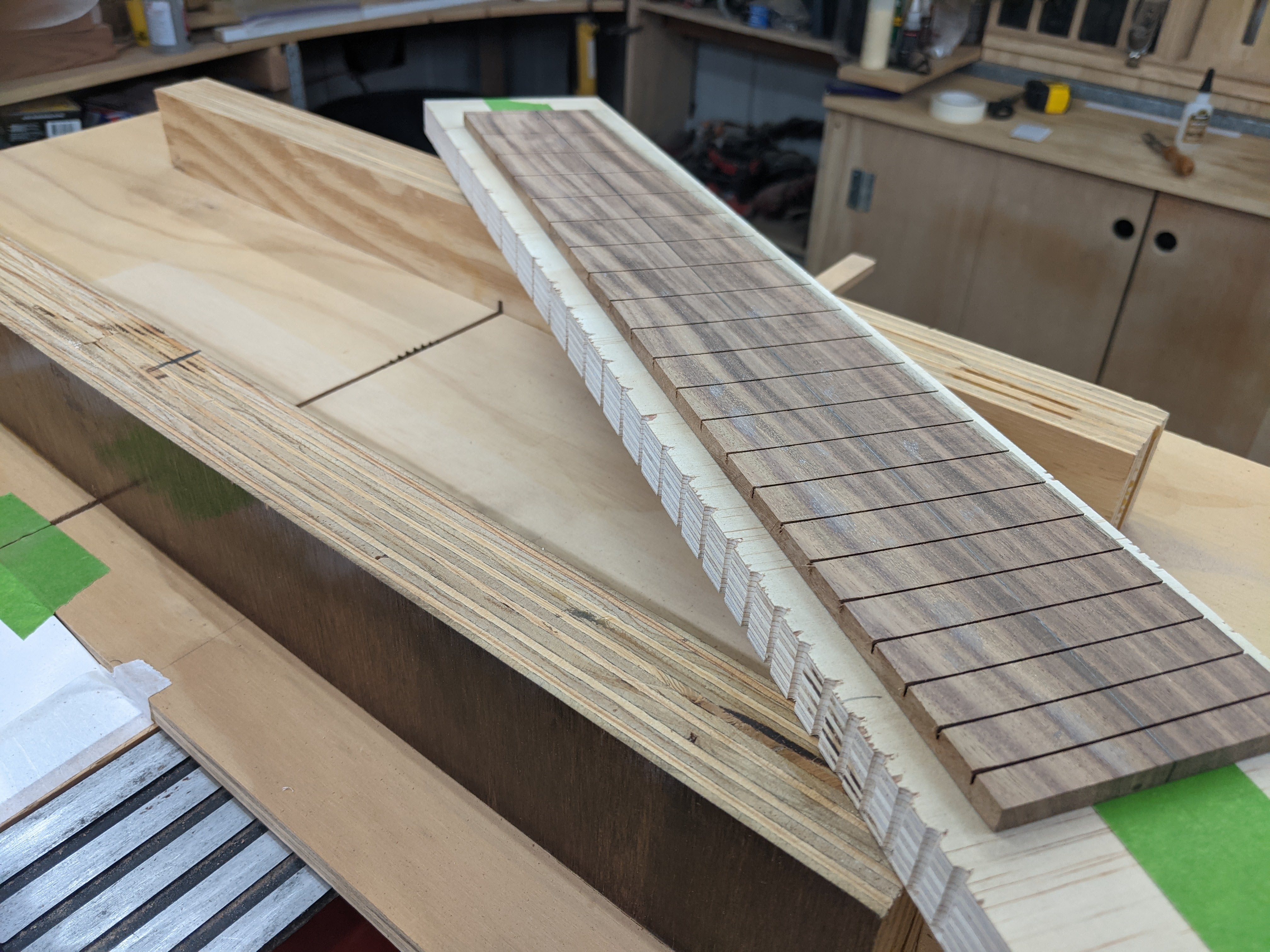
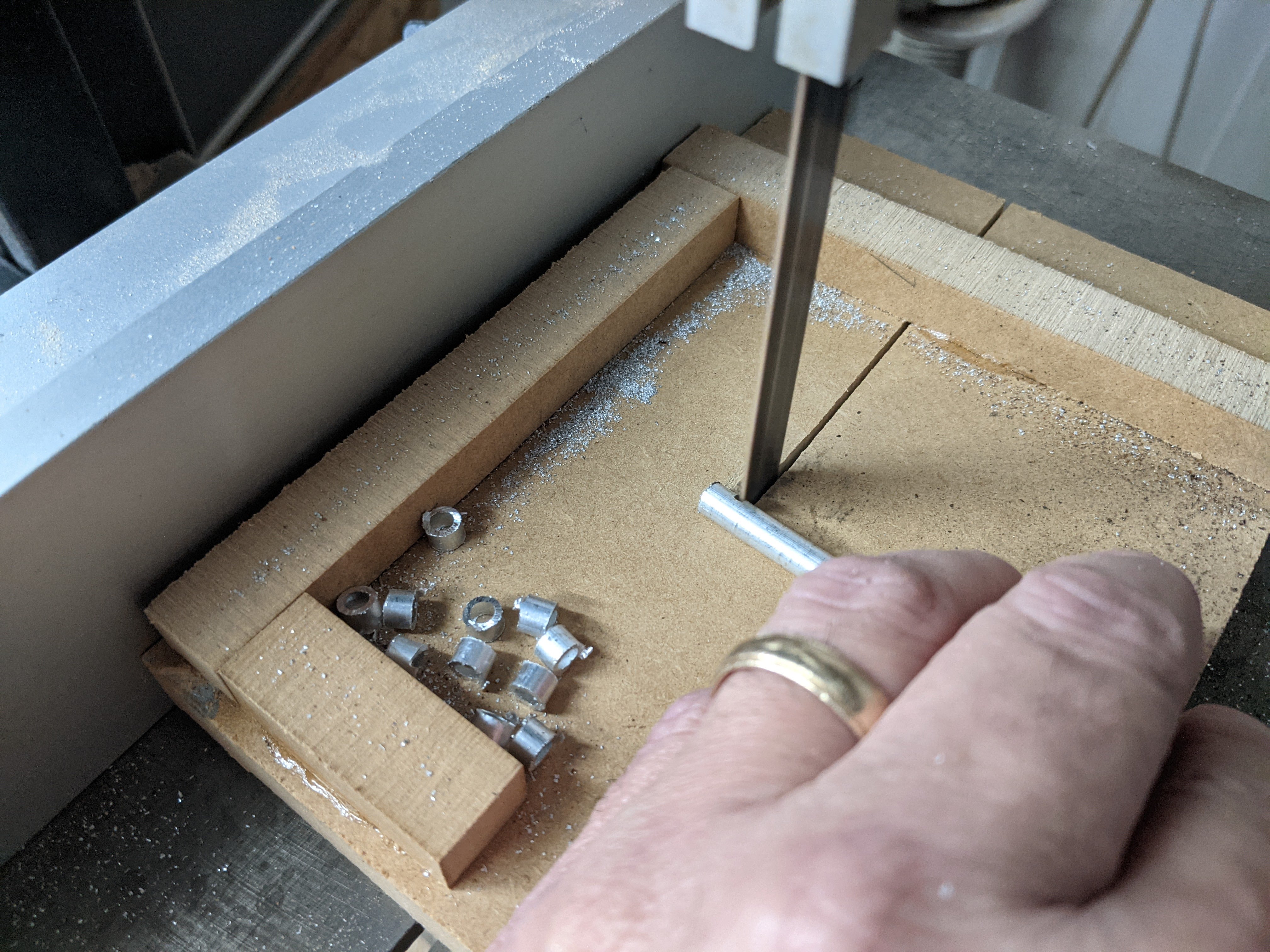
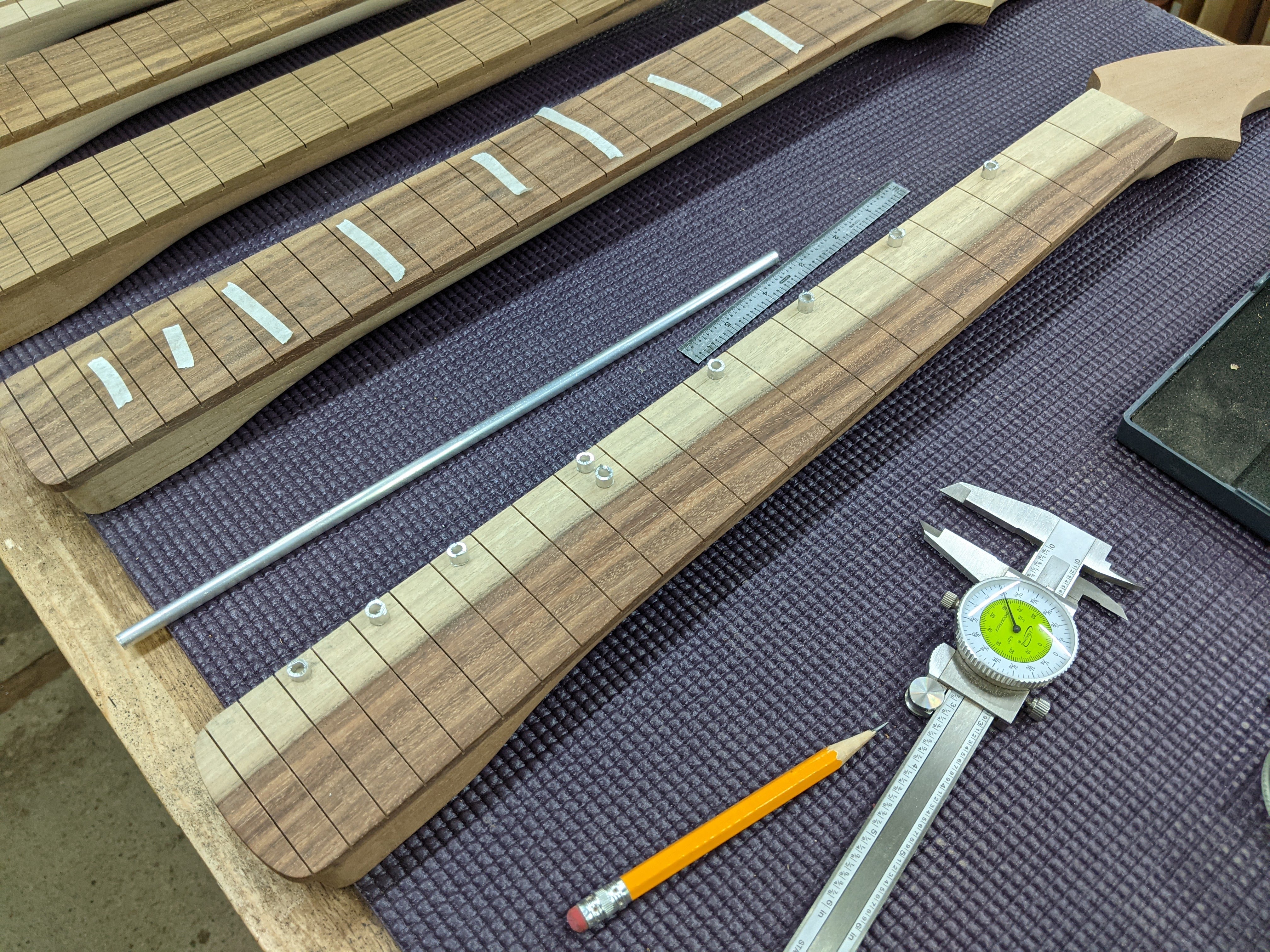
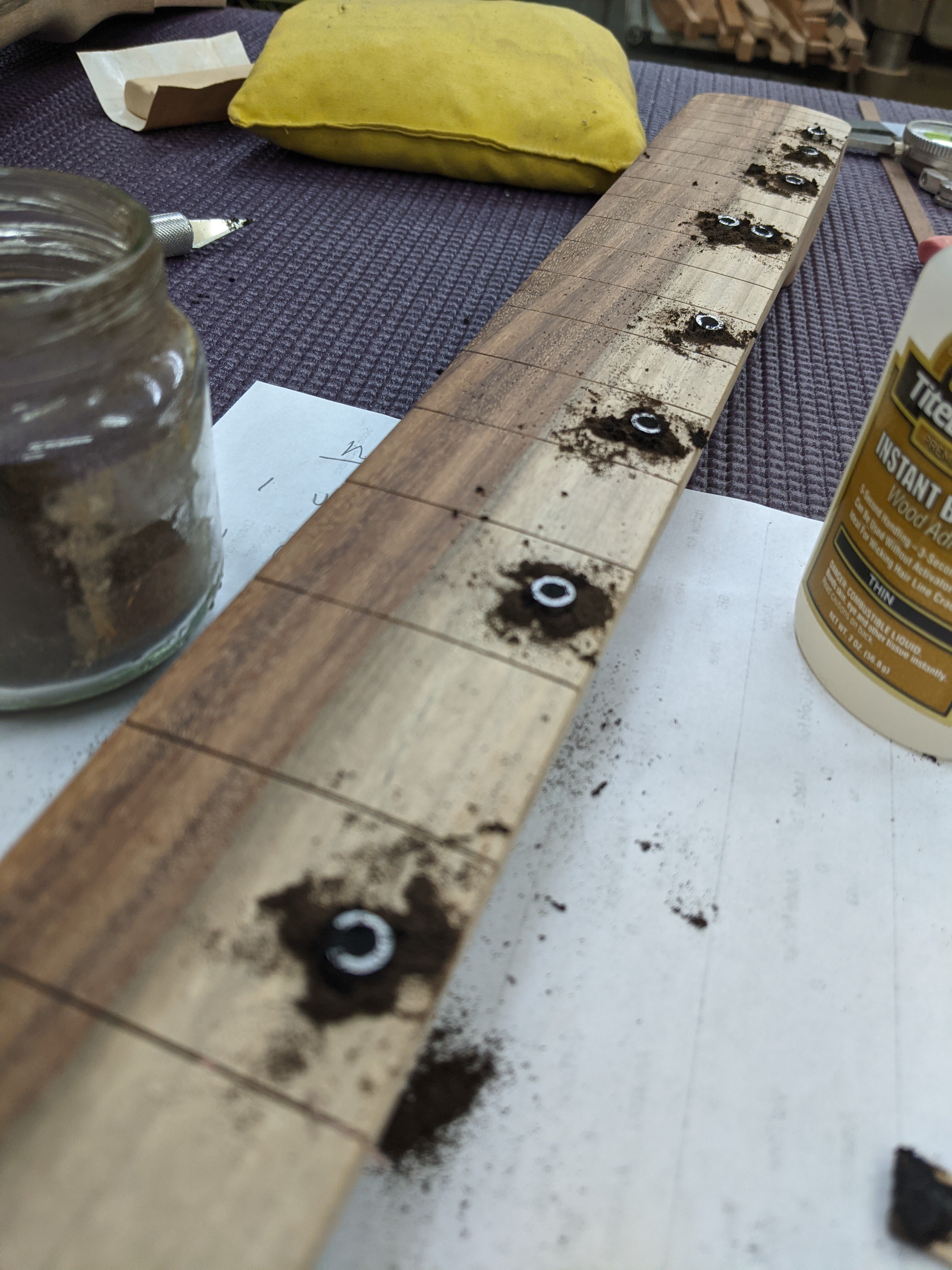
Fret boards next. All three of these guitars got North Indian Rosewood fretboards. Two of them with two-tone figure, and one with just a nice, consistent rosewood. Fretboards get glued to necks and the rough bodies and necks really start to look like guitars. Each of these got fretboard markers made from aluminum tube filed with supergule and ebony dust to make circle dots.



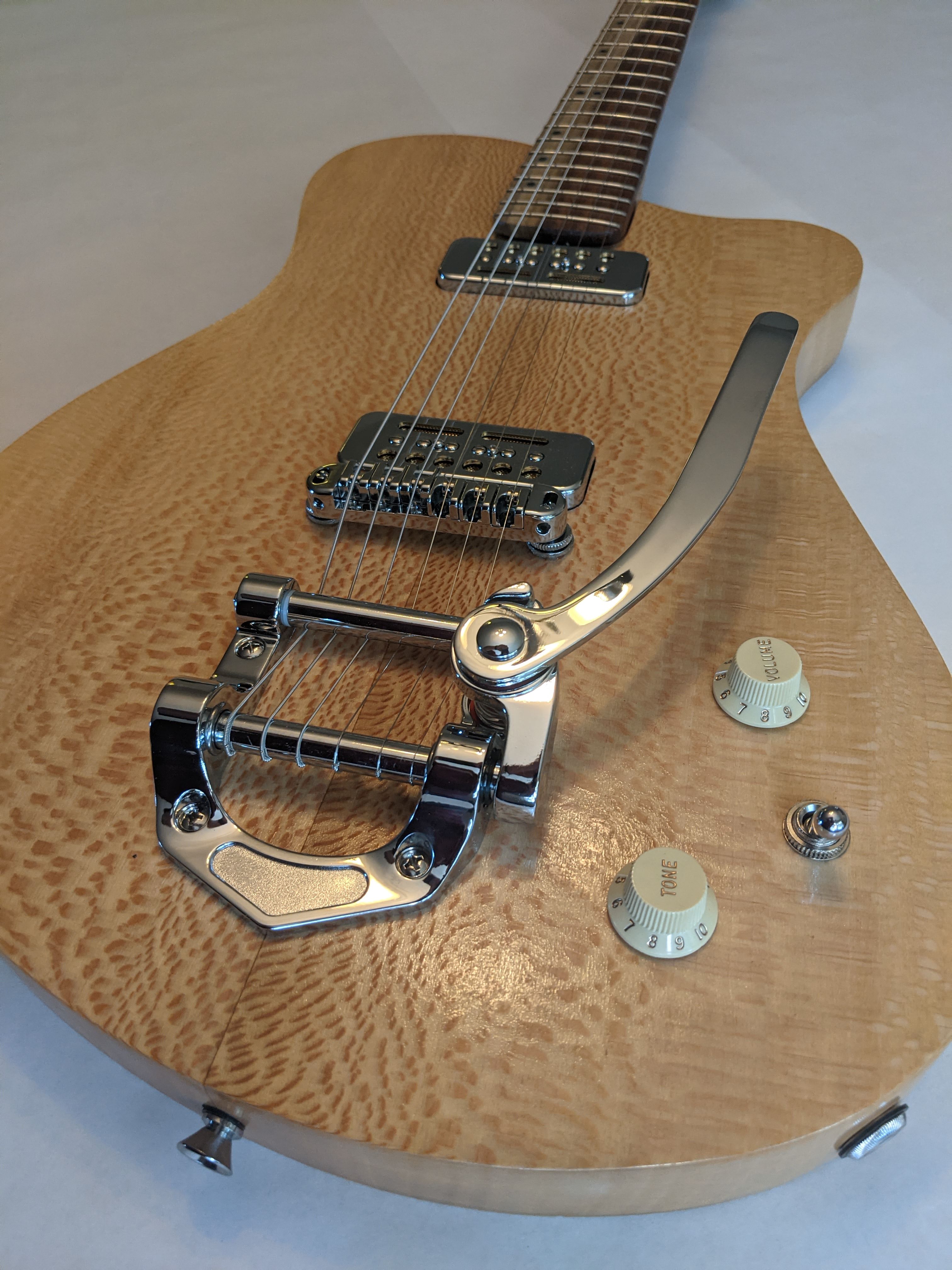
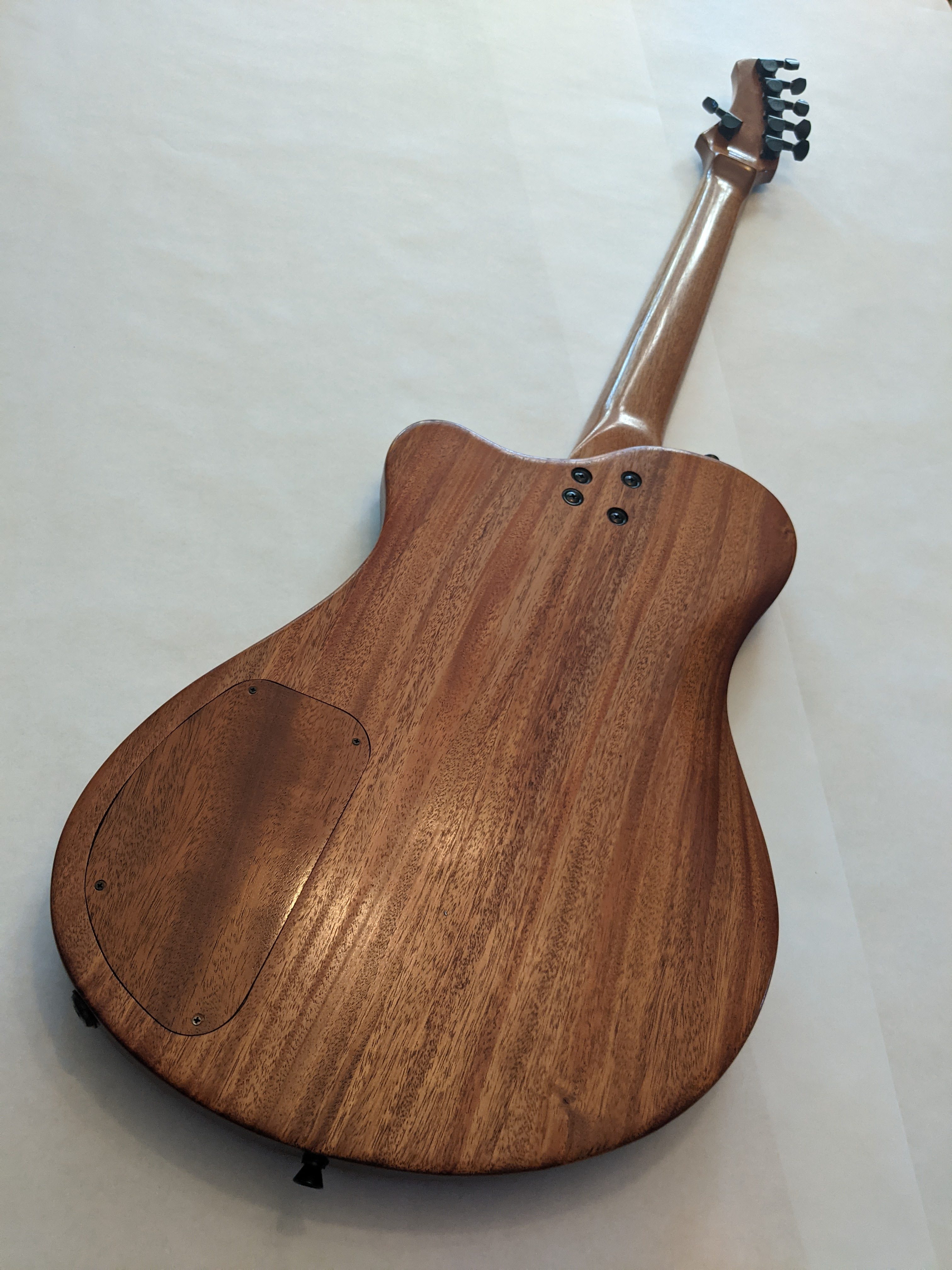
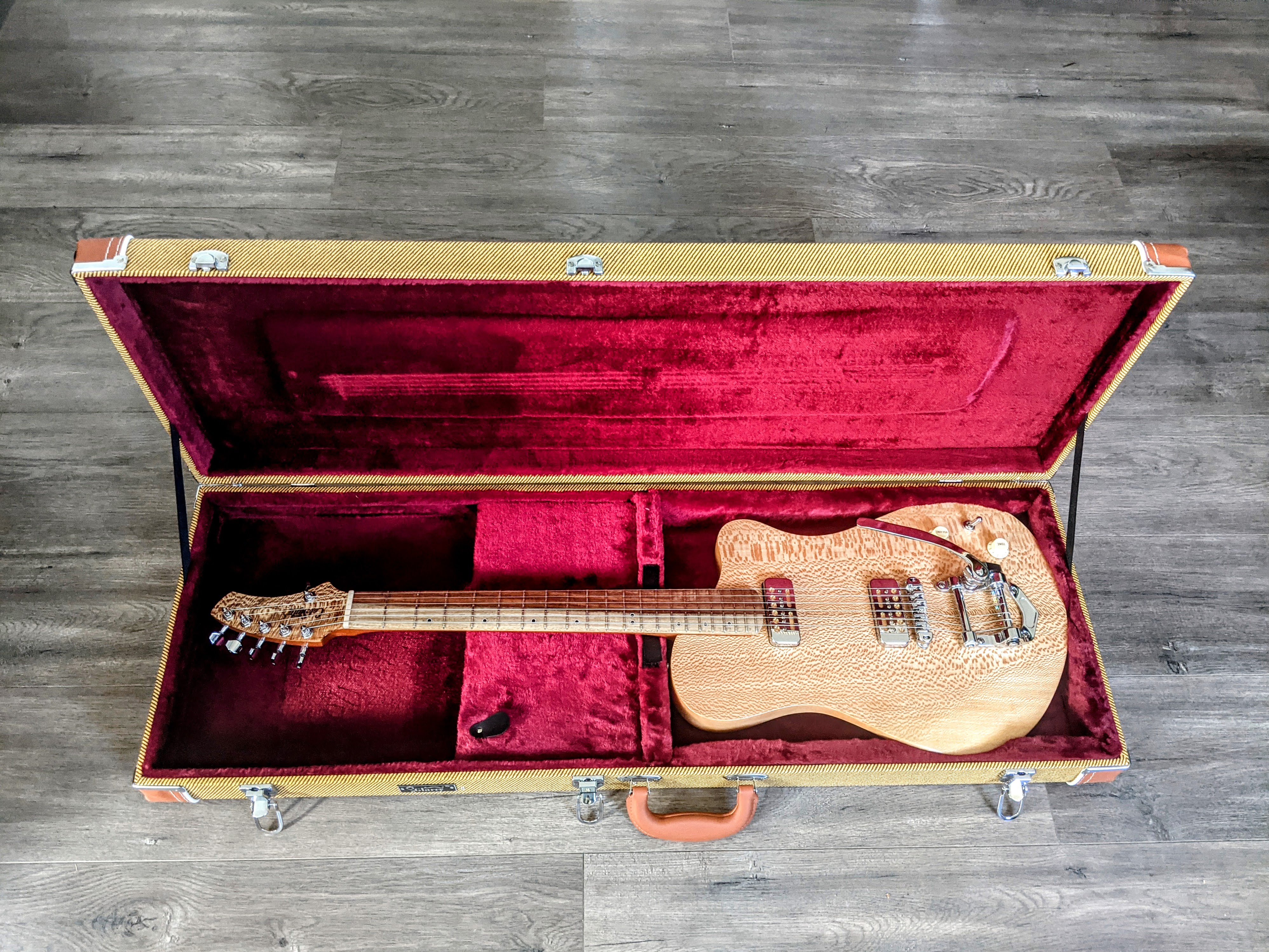
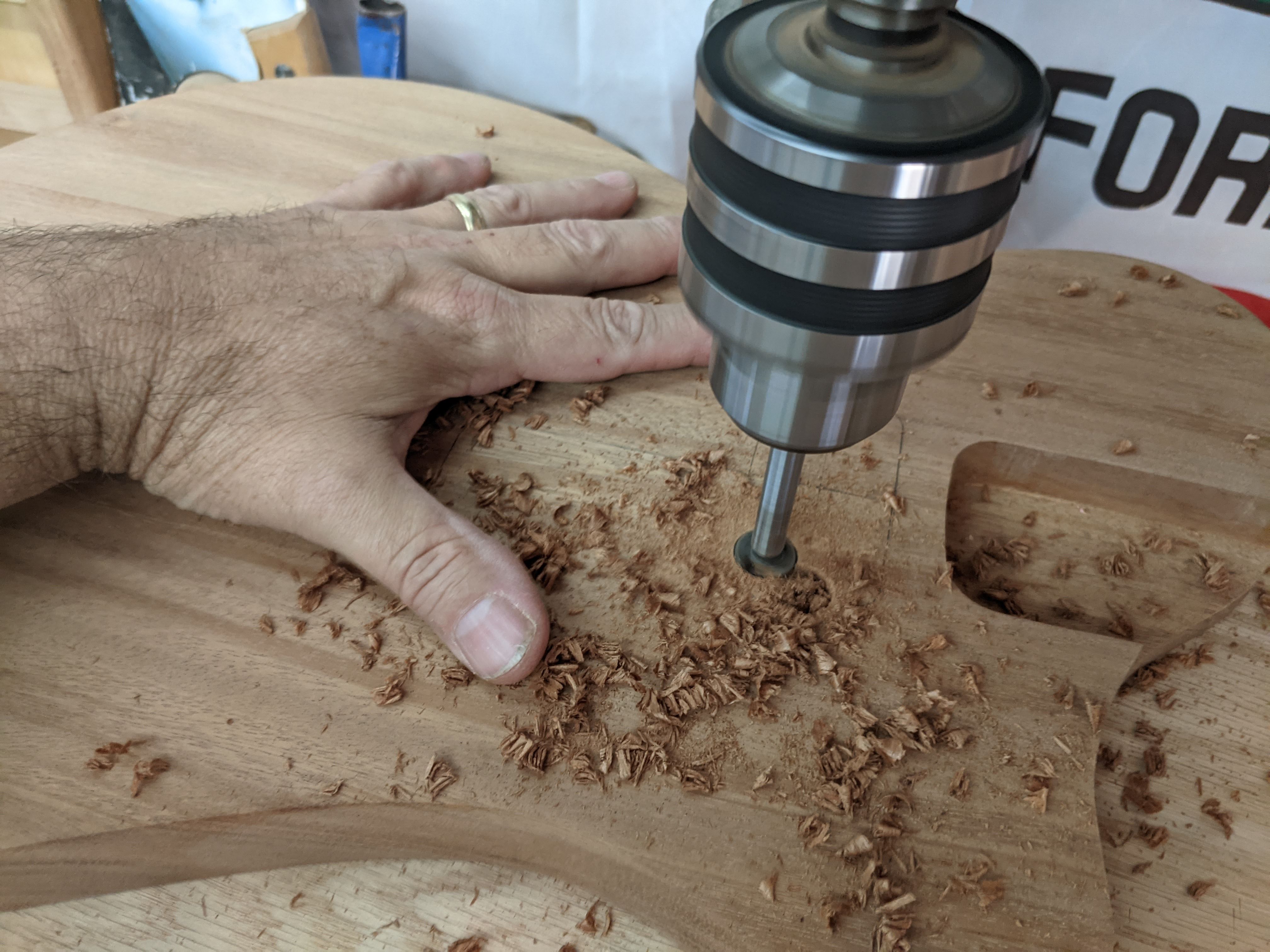
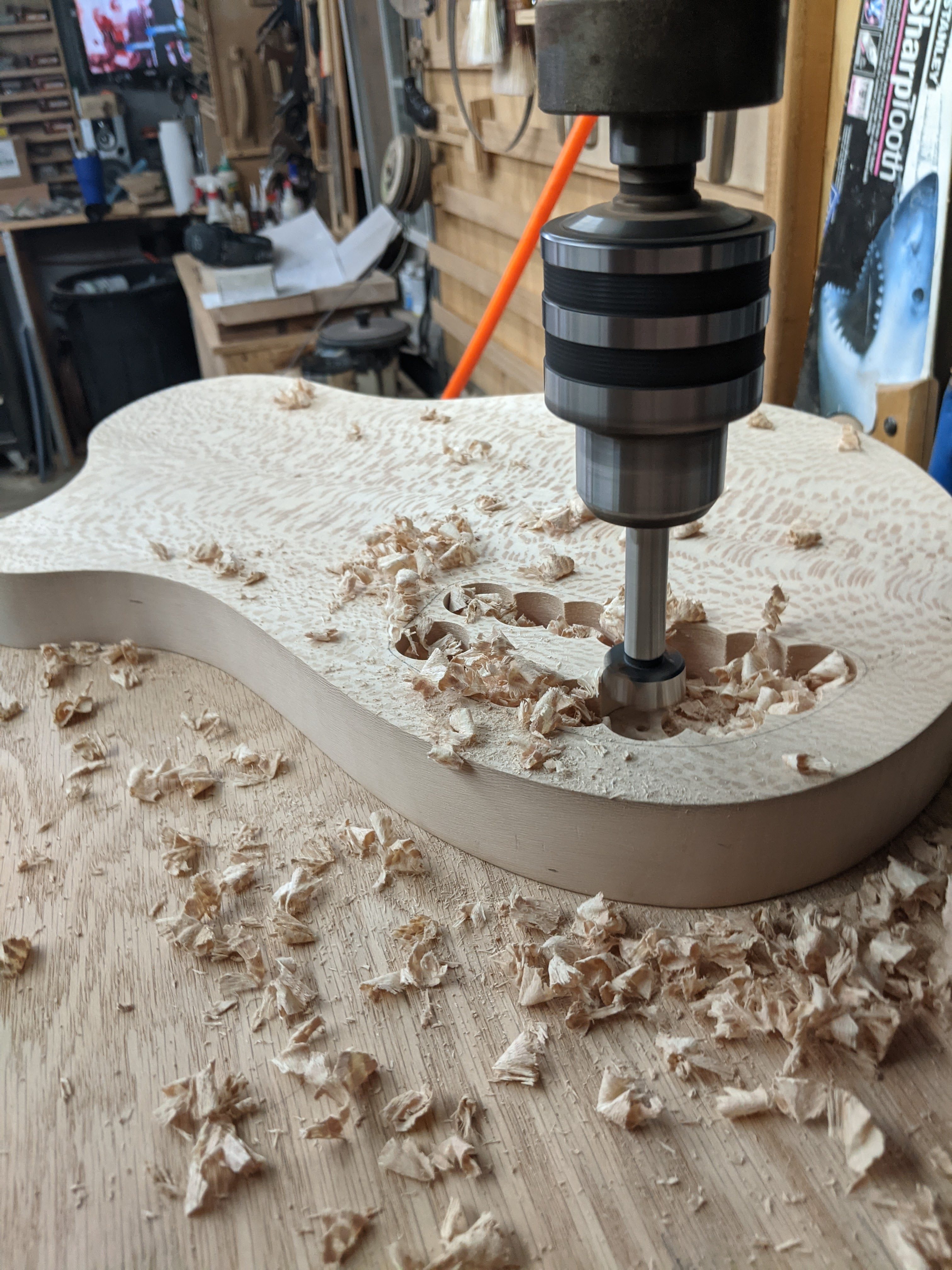
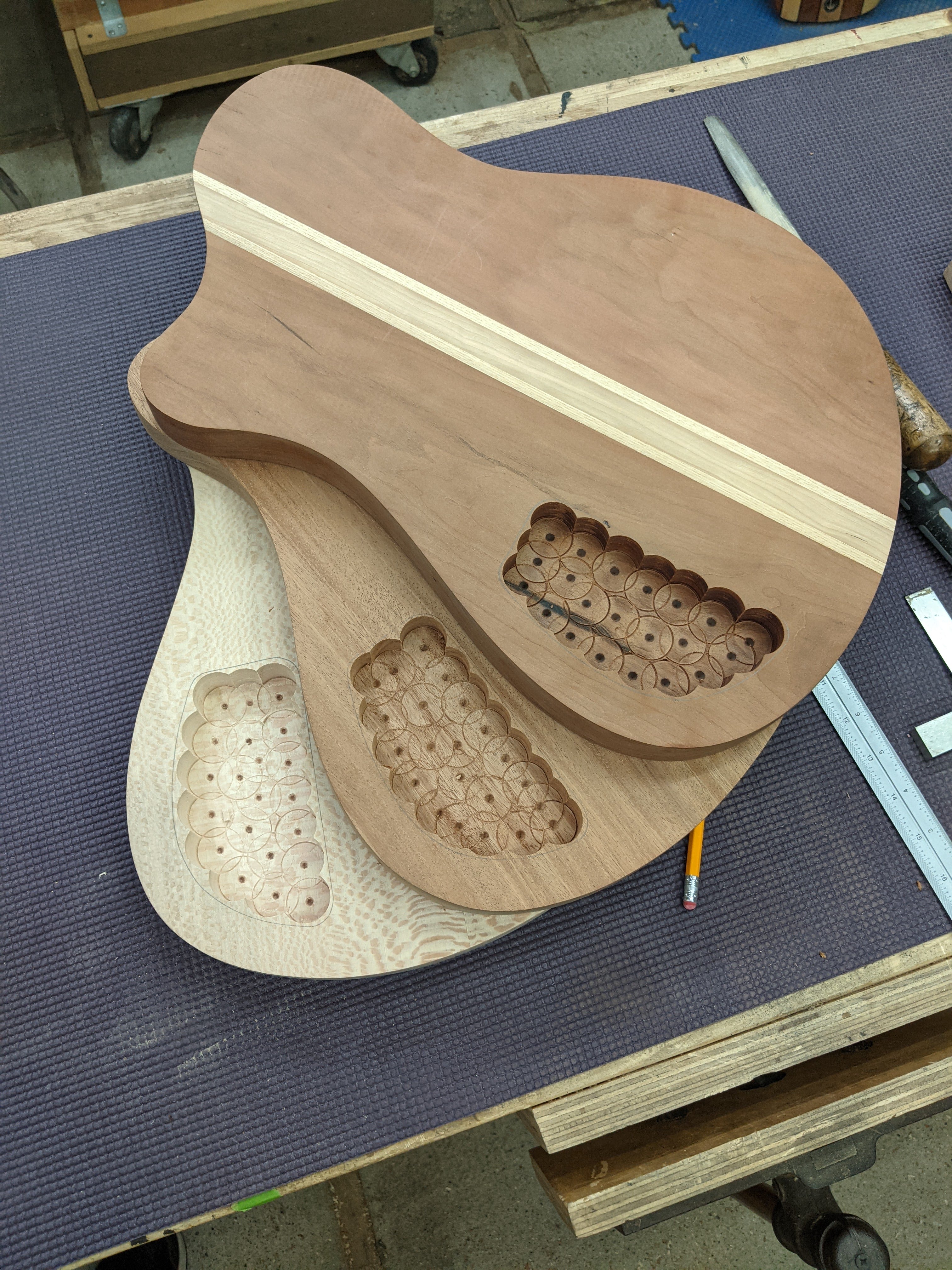
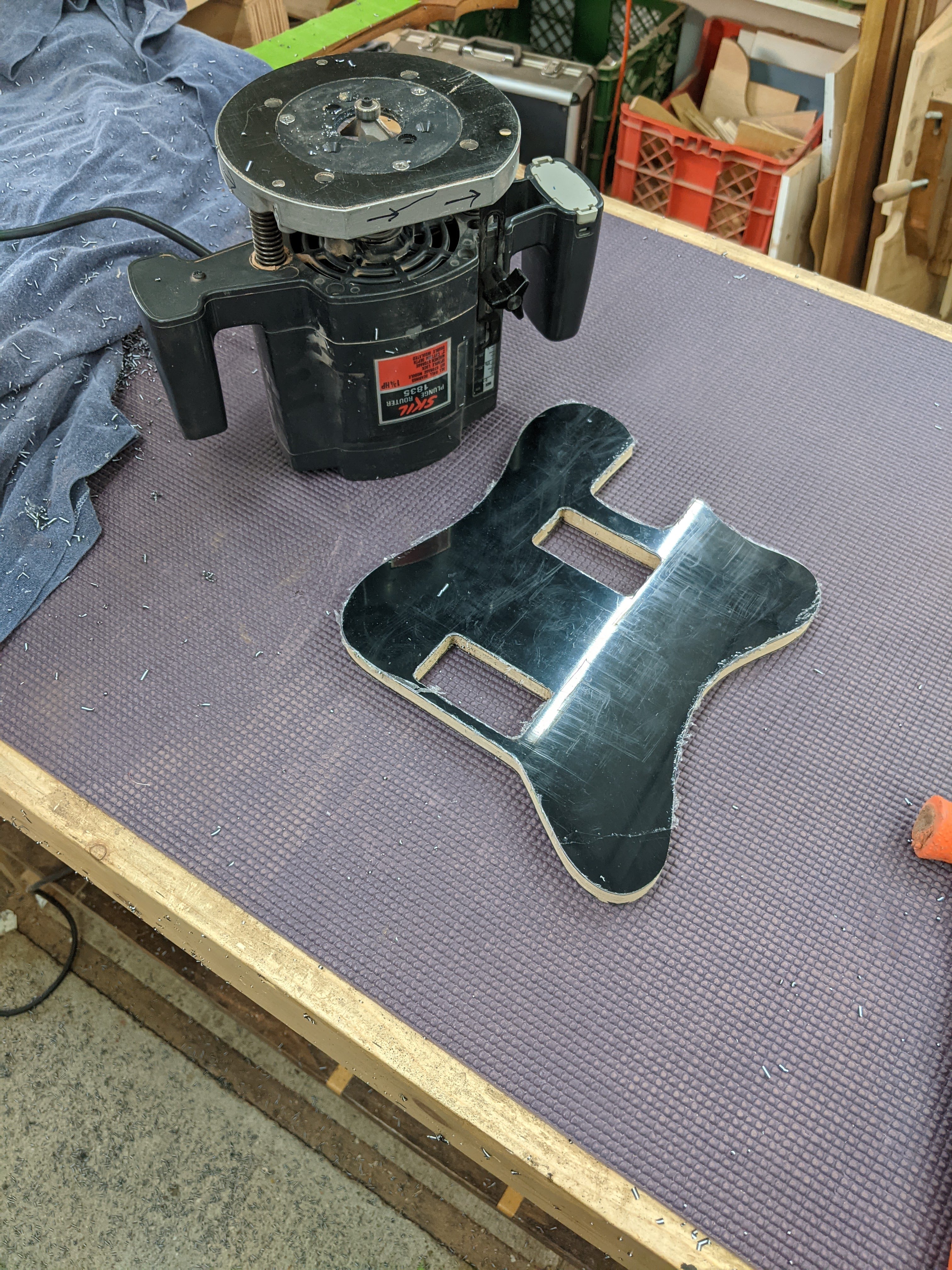
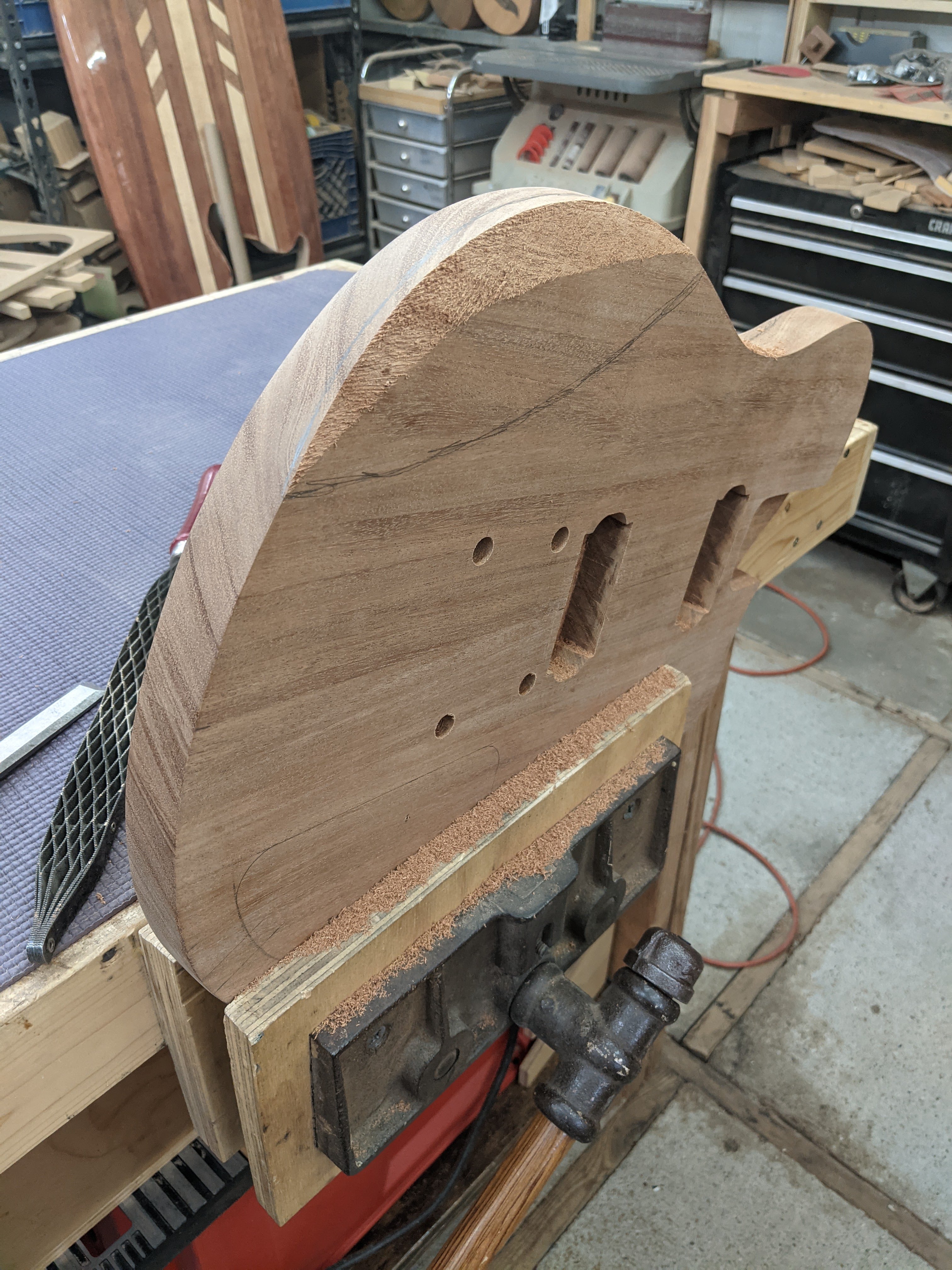
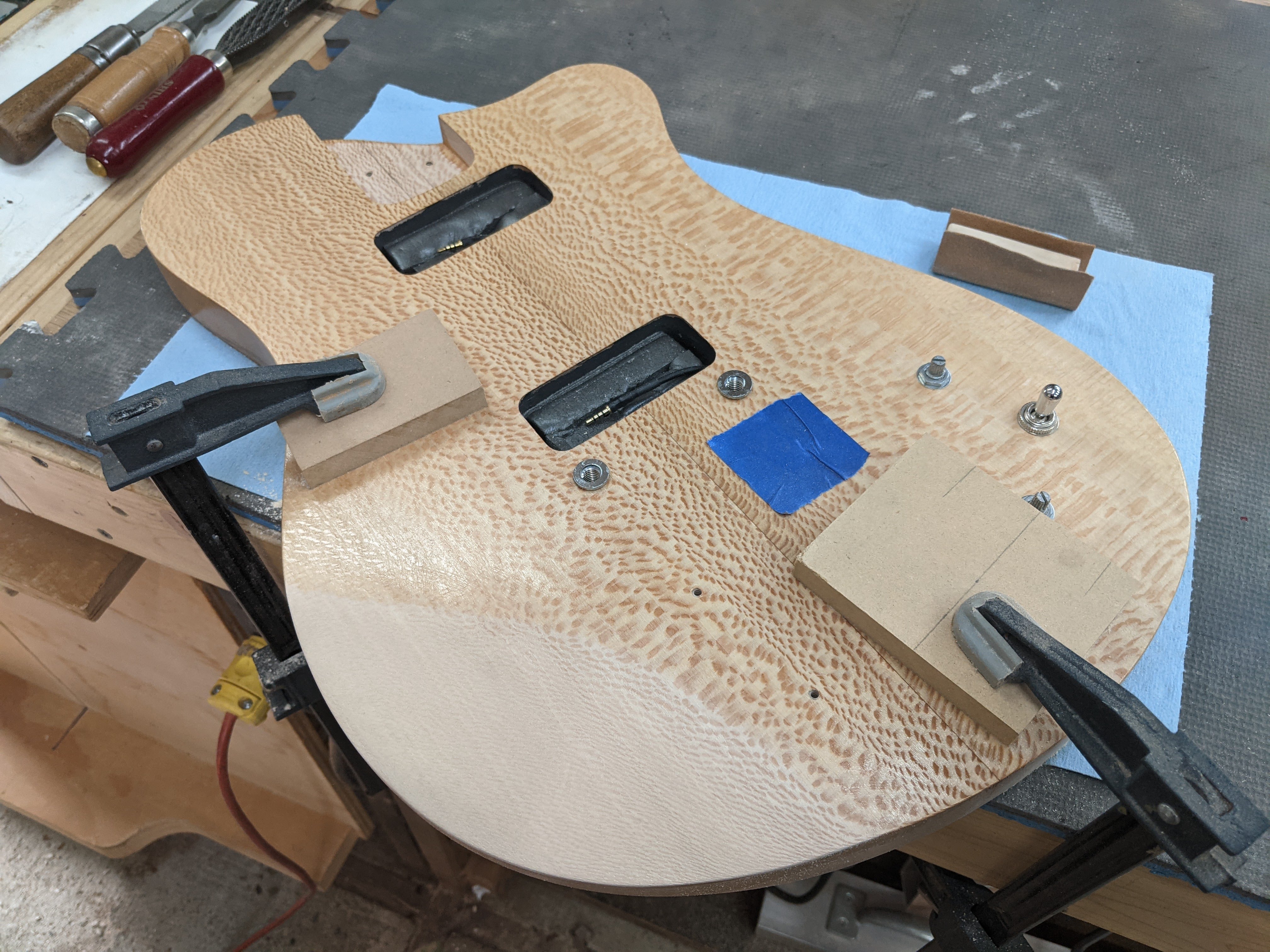
Pickup and control cavities are cut into the front and back back, starting with the drill press, then cleaning up with the router. Each back gets a matching control cover, and hardware is assigned to each instrument. Two of these instruments got humbuckers and hard-tail bridges, while the third got P90s and a Bigsby style tremolo. The mahogany one also gets a BWB pickgaurd.

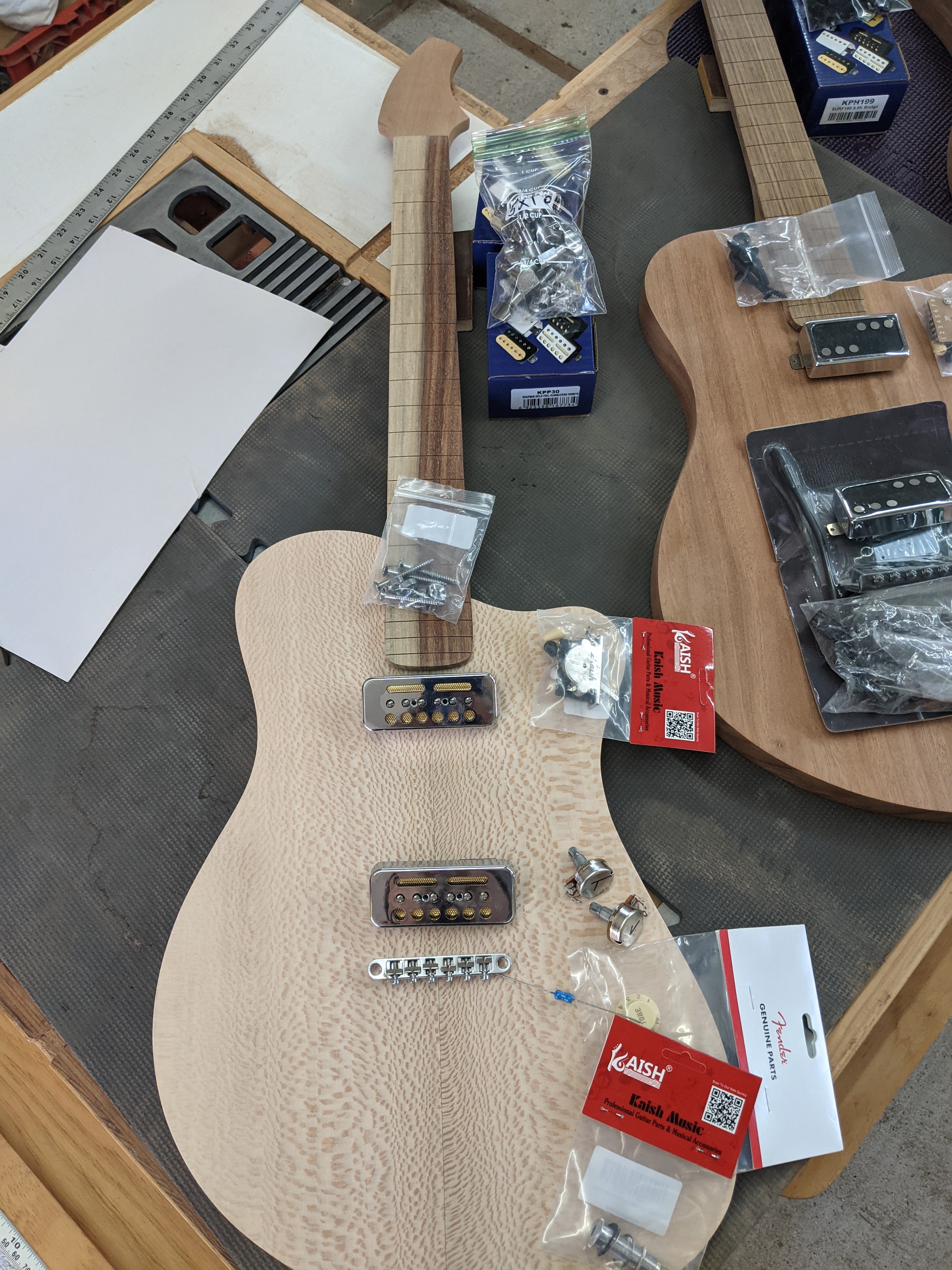
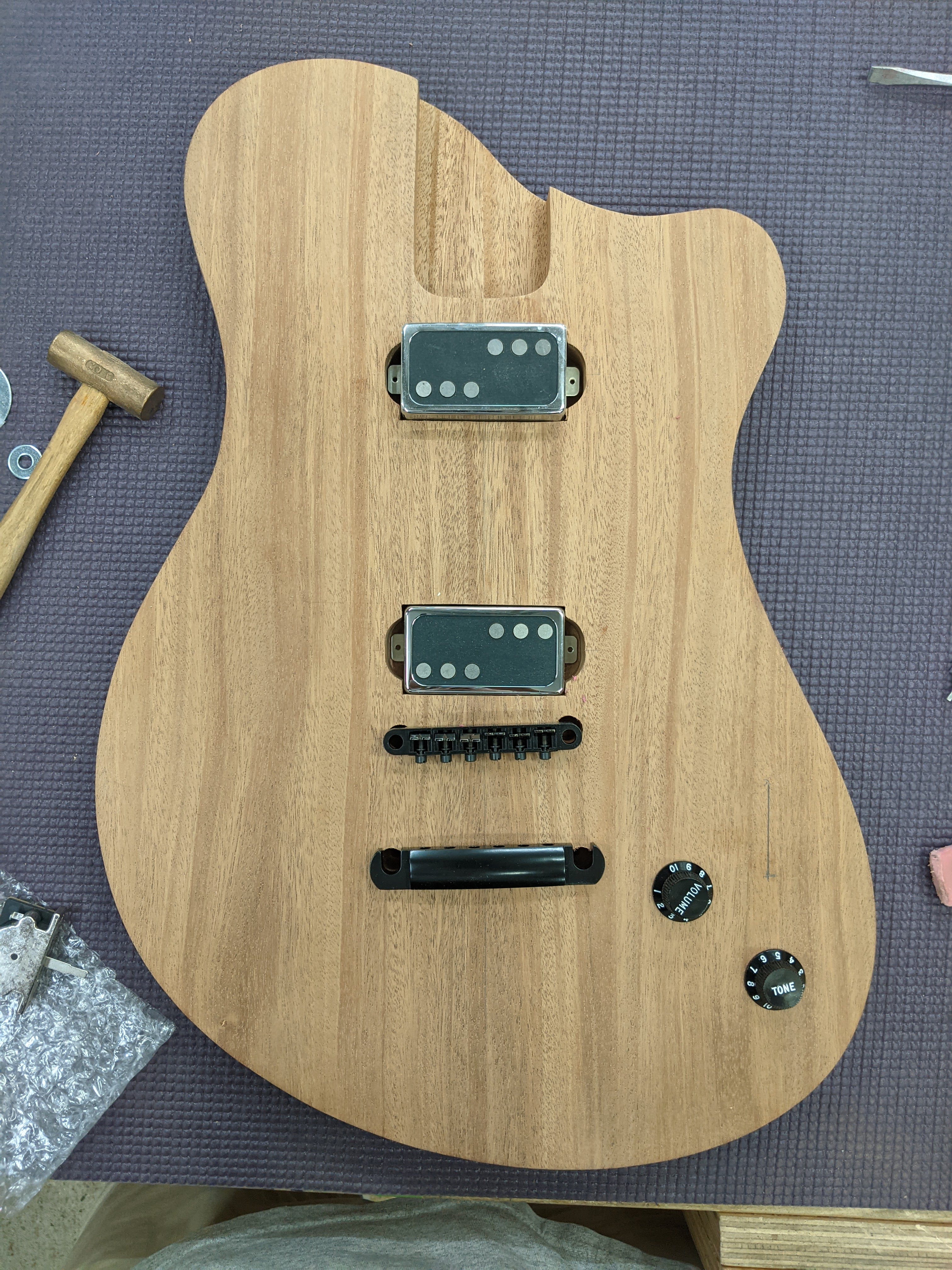
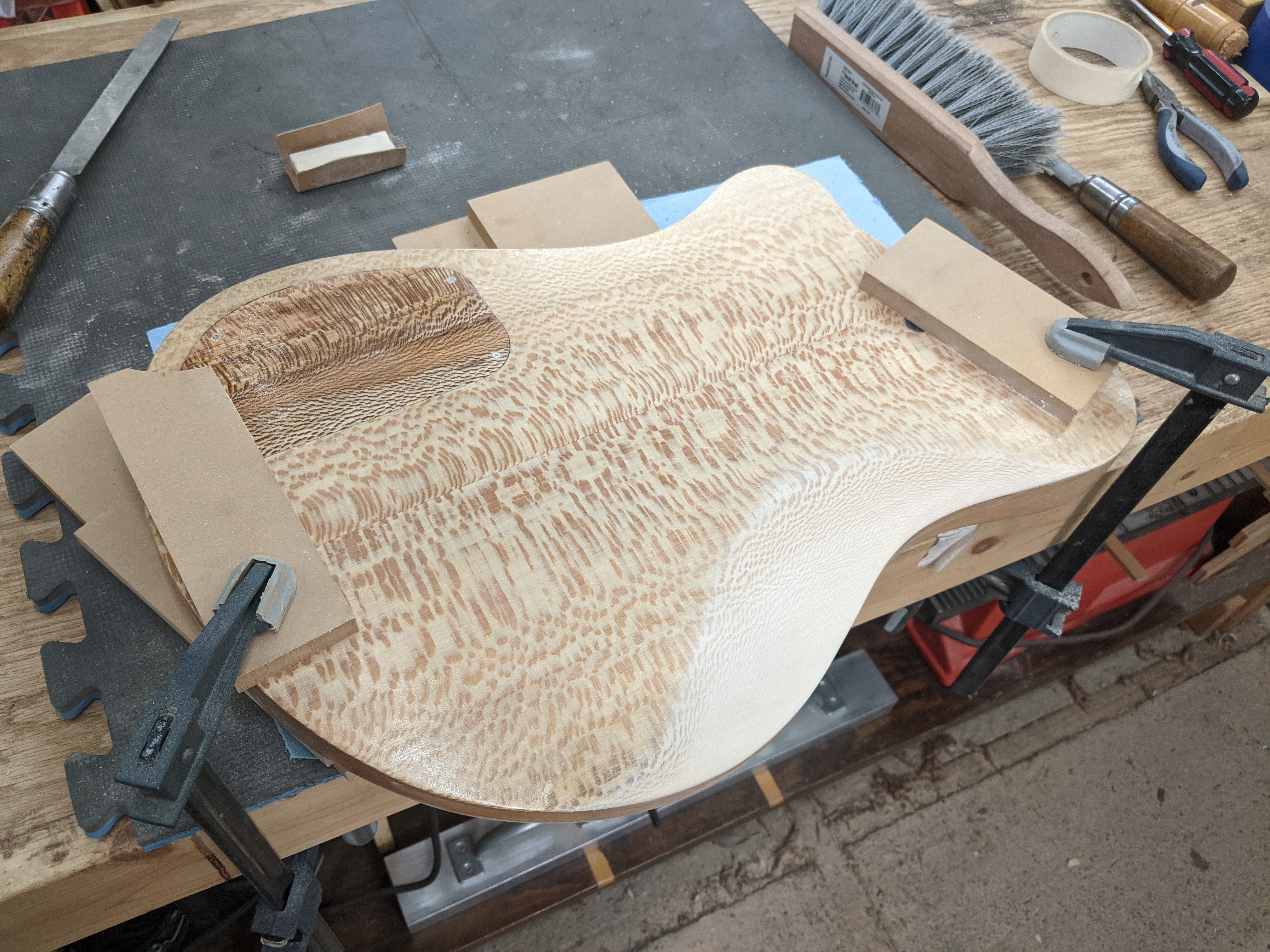
Initially the mahogany and cherry instruments got arm and belly carves, but the sycamore stayed more of a flat shape front and back. I originally thought that would look better with the Bigsby style tremolo. Eventually I changed my mind and added the comfort carves to the sycamore body as well.
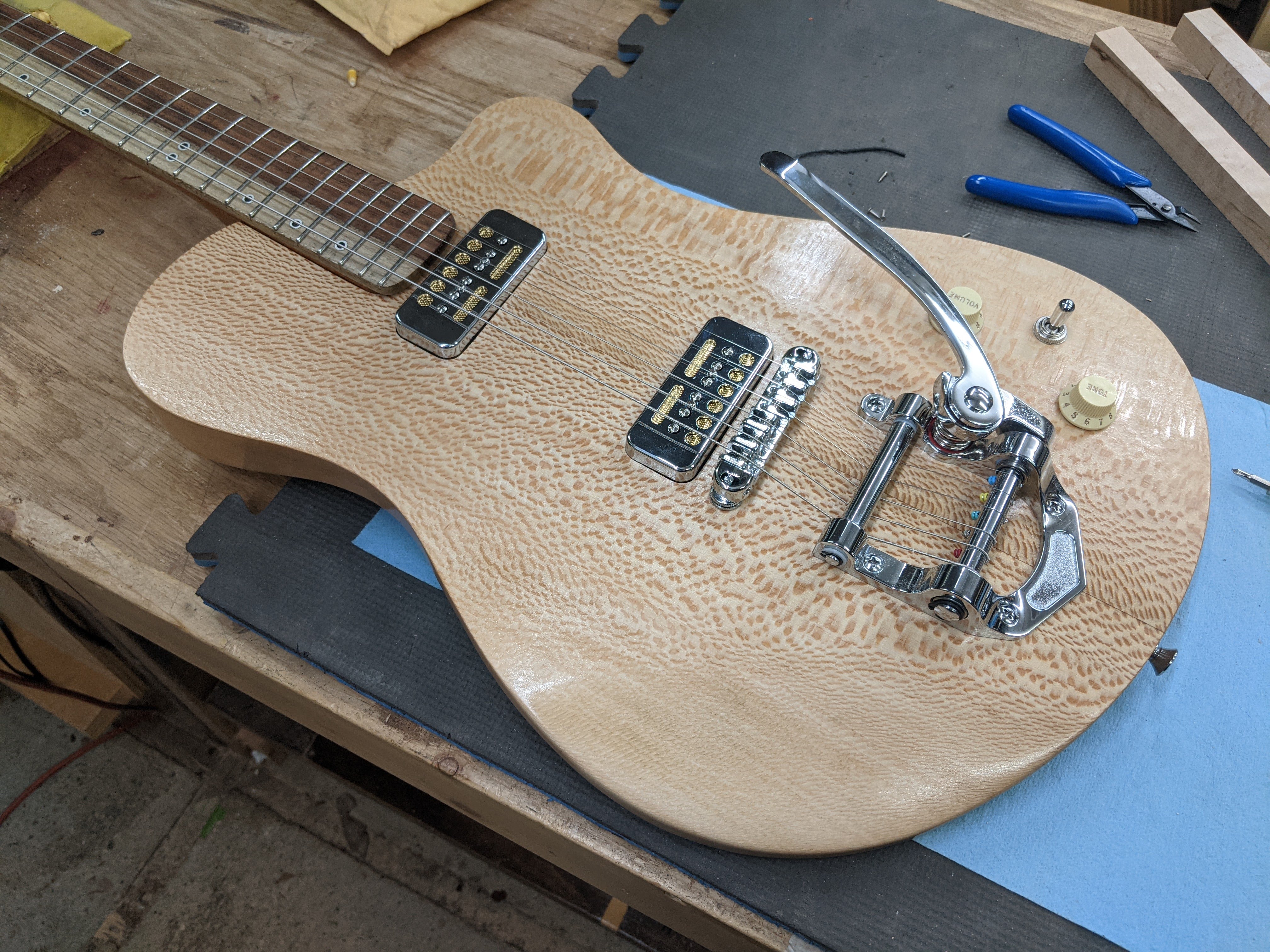
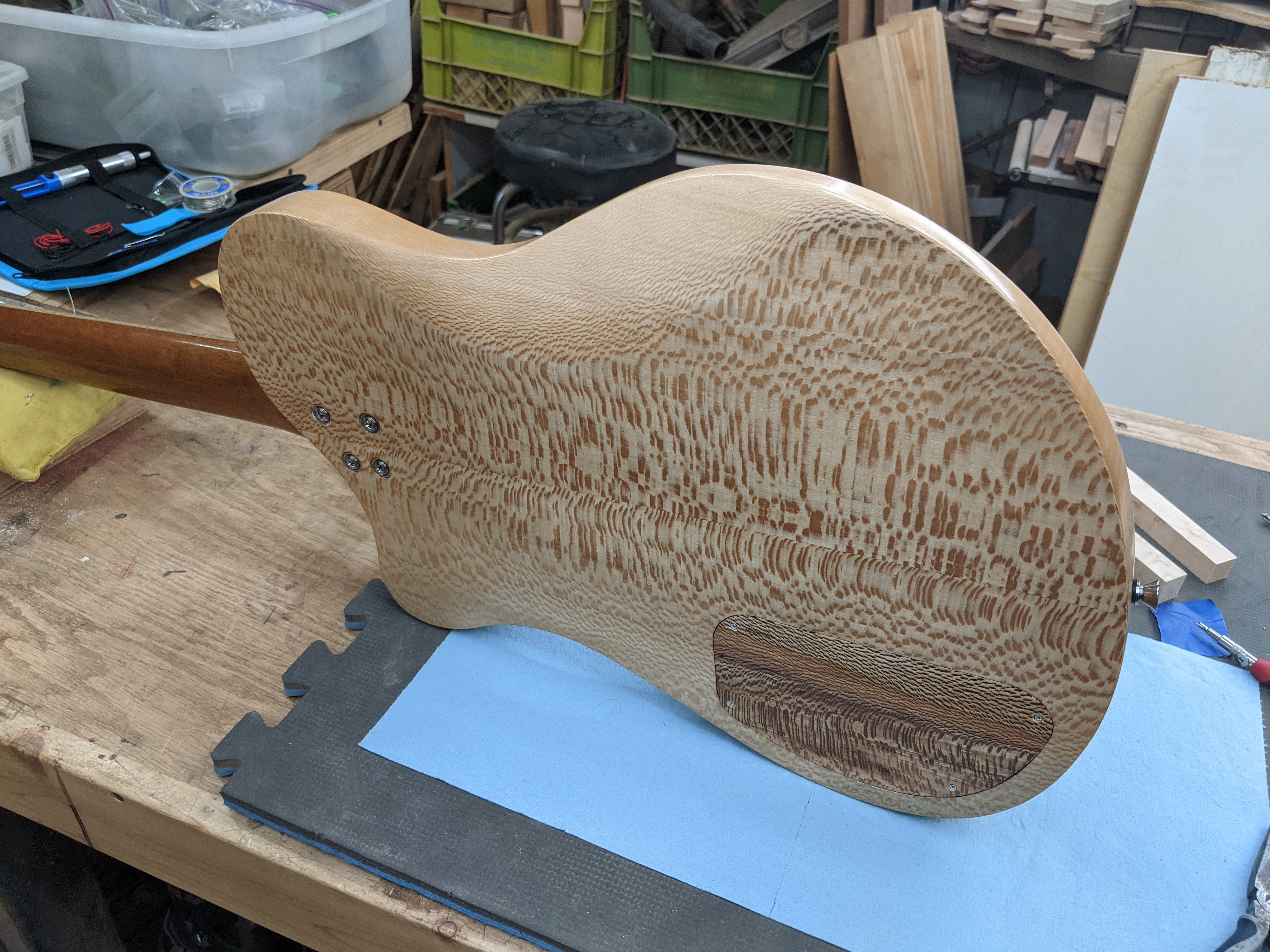

Frets were installed, dressed, and polished, and then on to final assembly. These are some of my favorite instruments. The cherry one sold very quickly, and the mahogany one was donated to the Switchfoot BroAm Foundation for their annual charity auction. As of writing, the sycamore instrument is still looking for its forever home.